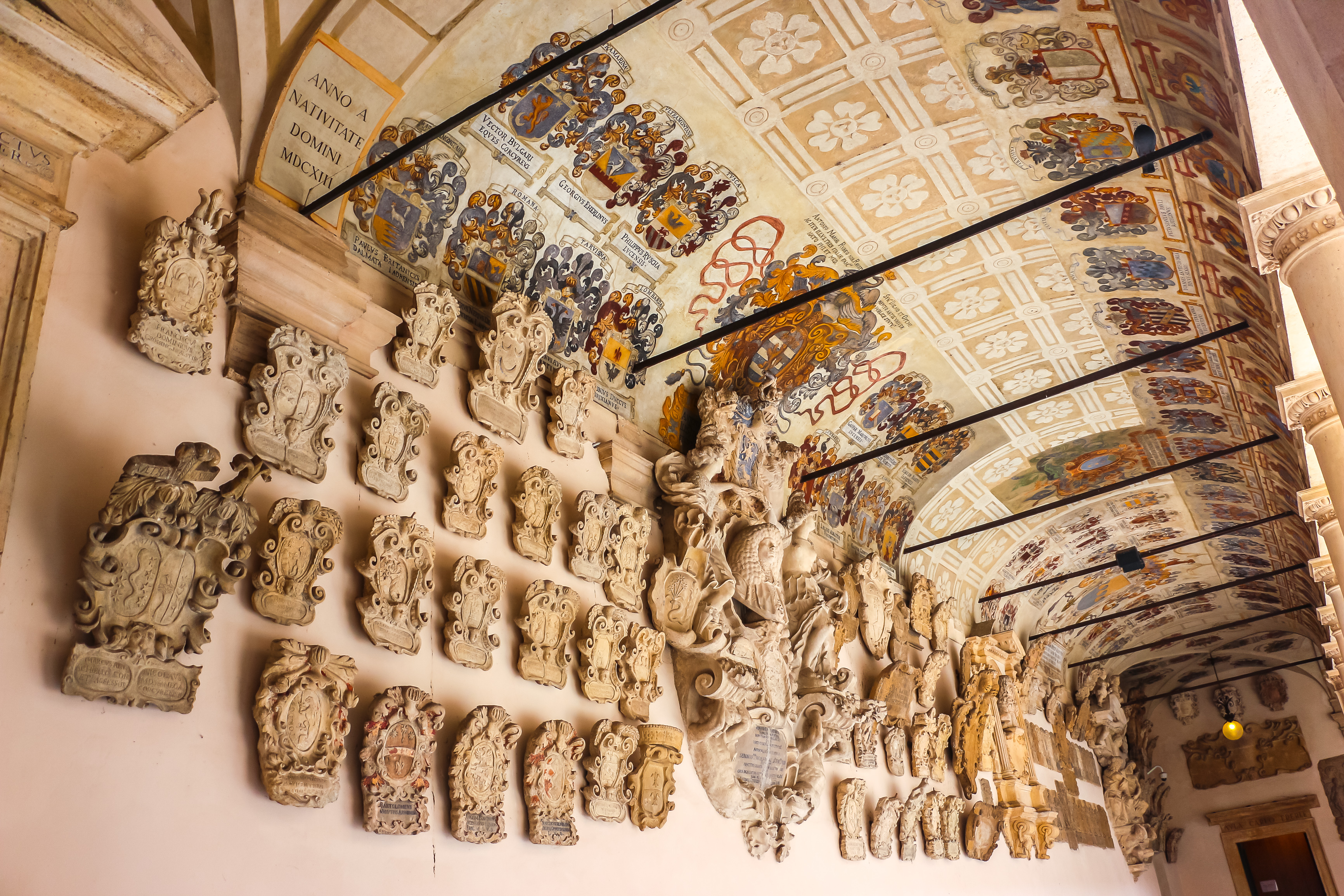
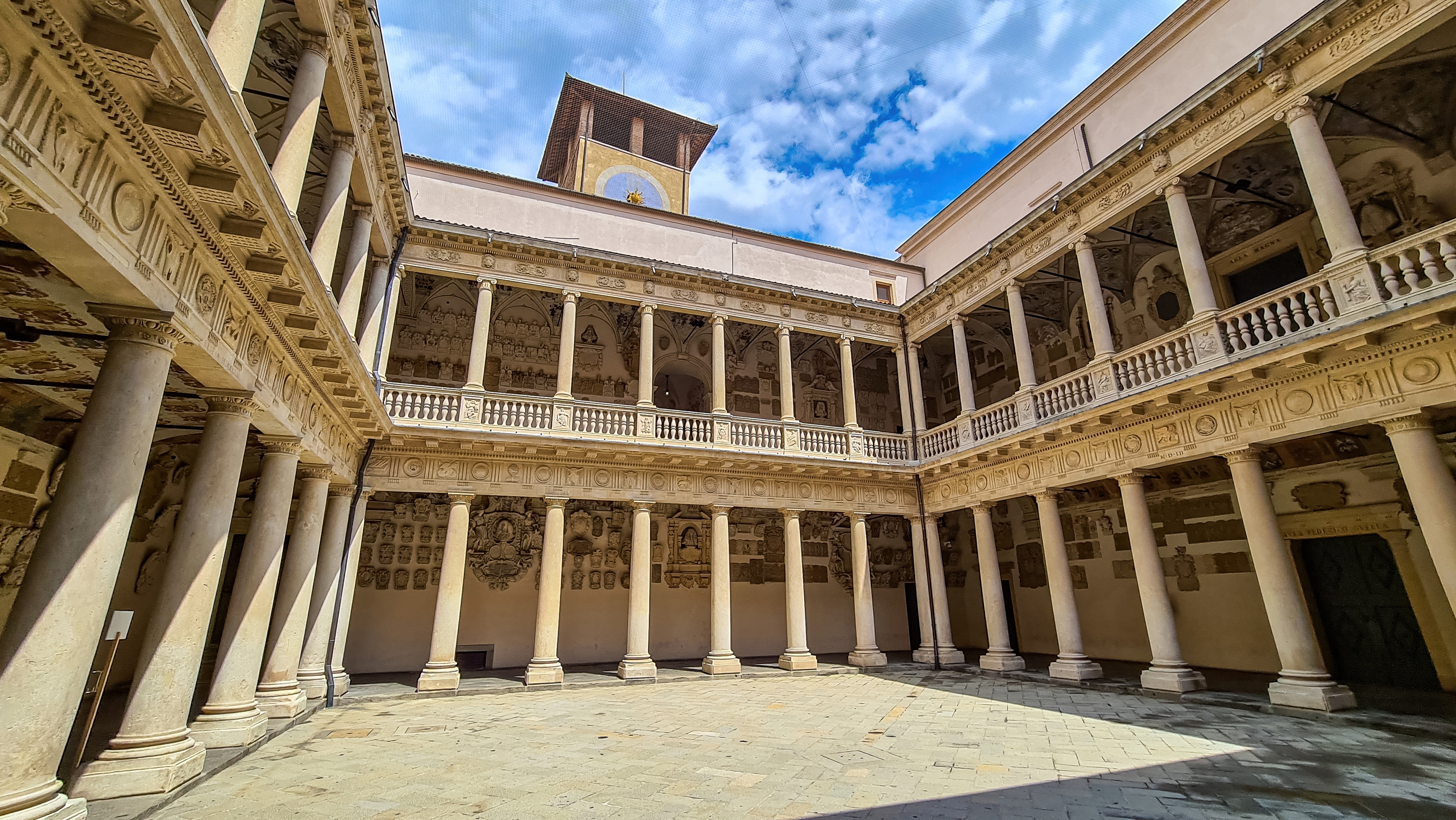
The palace was created by merging three buildings, and later became the seat of the University of Padua. It boasts the oldest anatomical theatre in the world (1595). In the 16th century its famous botanical garden was also established, while the palace is particularly renowned for its historic atrium courtyard with around 3,000 coats of arms of the families of students and professors associated with the university.
It was here—after completing private schooling with the Morosini—that Santorio studied, first philosophy and then medicine. During his student years at the university the anatomical theatre had not yet been built, but he found it there when he later returned as a lecturer. In 1611 Santorio assumed the professorship of theoretical medicine at the University of Padua, where he proved himself to be an excellent, charismatic, though at times cynical lecturer, immensely popular and attended by students from all across Europe. He ceased teaching in 1624, when he returned to Venice and devoted himself to medical practice.