Description
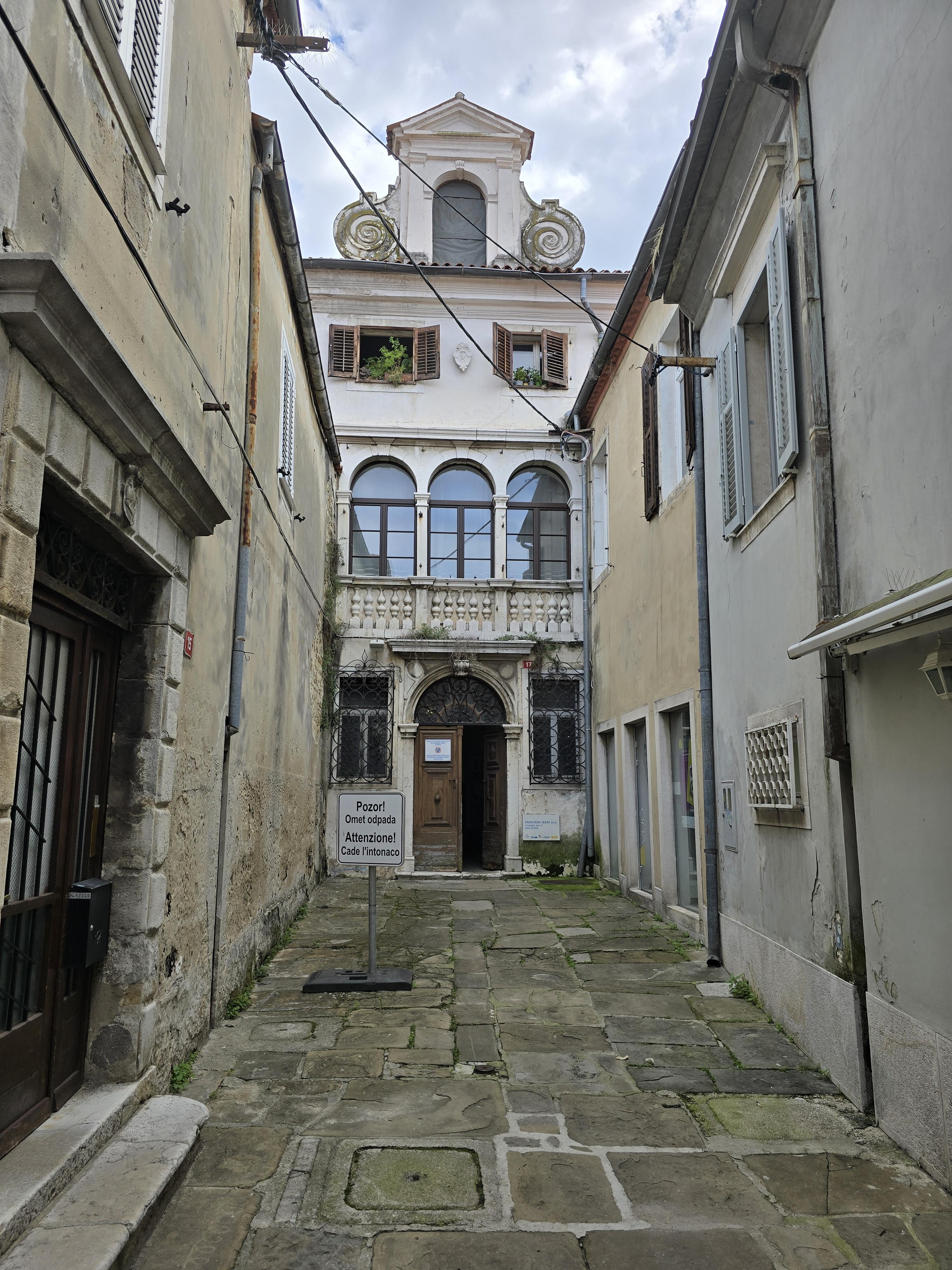
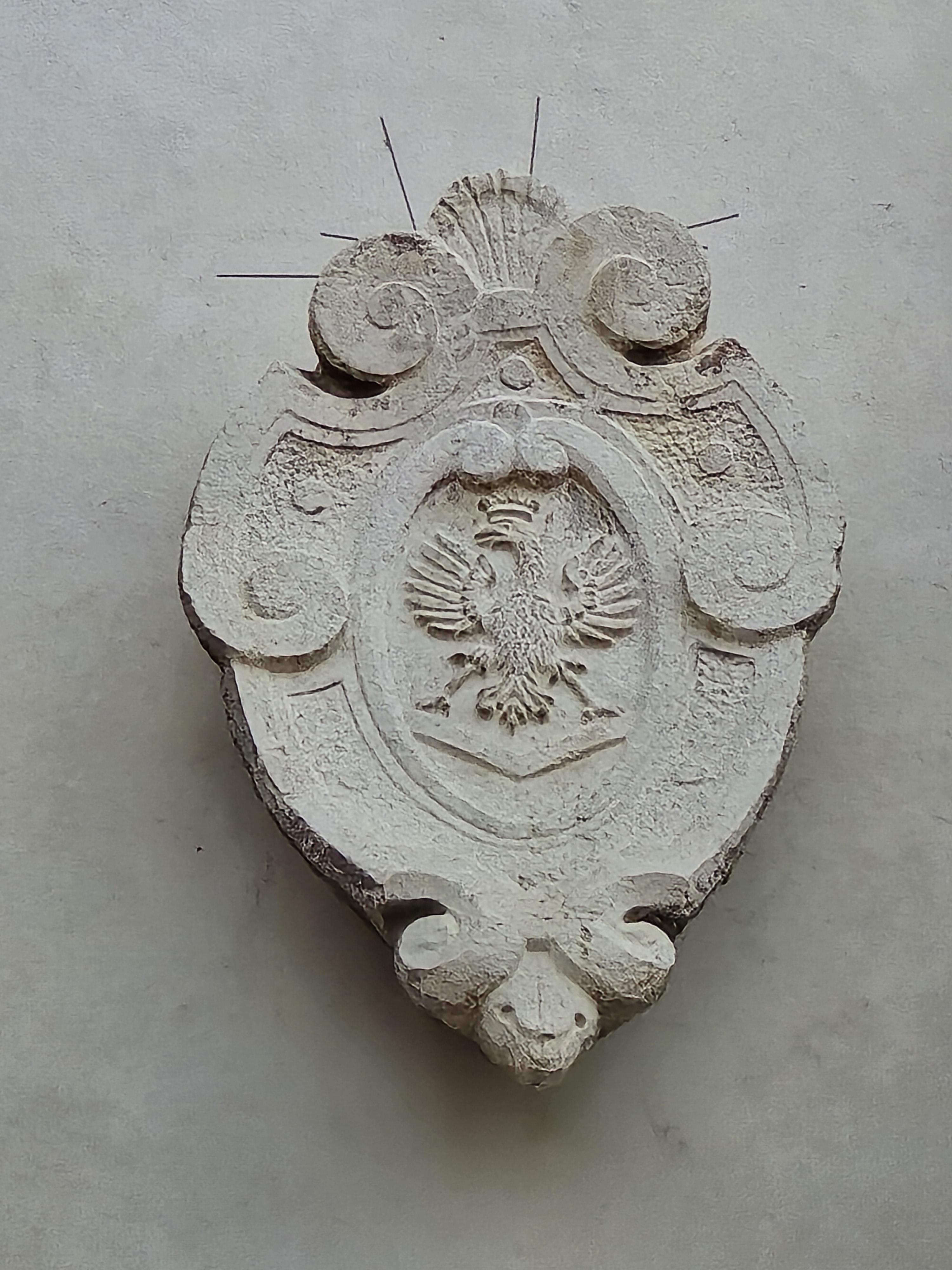
The Barbabianca family is first attested in Koper in the 16th century, and they were admitted to the Grand Council in 1550. From the end of the 16th to the end of the 18th century, we can follow seven generations of the family, which split into two main branches. The palace at Čevljarska Street 17 is usually designated as the family palace, but with later purchases the family also acquired buildings at Čevljarska Street 15 and Osvobodilne Fronte Street 3 (the Barbabianca–Kupelweiser Palace), which is why we find the family coat of arms on all of them. The cul-de-sac that leads from Čevljarska Street to the Barbabianca Palace was once colloquially called Calle della Cameral, as the camera fiscale, the Venetian tax office, is said to have operated there. It stands out for its interesting façade, where in addition to the characteristic semicircular portal and triforia on the first floor, we also find a finish with a dormer window and volutes.
Among the most important early representatives of the family were the brothers Matteo and Girolamo Barbabianca. Matteo became bishop of Pula in 1576, so Girolamo took over the care of the family. In the first decades of the 17th century, he greatly expanded and consolidated the family’s property. It included a house on Čevljarska Street in Koper, a rural domain in the Šantoma area, numerous other properties in the city, and extensive lands and salt fields in the Koper salt works.
In the late 17th century, long-lasting disputes over inheritance broke out among his grandchildren, which divided the family into two branches. The first soon died out, as Girolamo’s descendant Giacomo, who died in 1710, had no male heirs. His wife Giustina Tiepolo and daughter Elisabetta even had to leave Koper due to family disputes, and the property was taken over by other relatives. Giustina moved to Venice with her daughter, and legal disputes over the inheritance then dragged on until the beginning of the 19th century.
The second branch was much more numerous. Mario Barbabianca (1615–1679) married Ariadena Scampicchio from Labin in 1639, and the marriage produced nine children, but only three sons survived to adulthood and continued the family line.
In the second half of the 18th century, the male line of the family became extinct. The will of the last owner of the Barbabianca family, married Gravisi, led to a long-running legal dispute between the Gravisi and Tacco families. The dispute was finally resolved around 1815 in favor of the Gravisi family.