Description
Unlike most of the mansions in this region, the one in Šempeter pri Gorici probably has no mediaeval predecessors despite the fact that the settlement is one of the oldest in the wider Gorizia area.
The mansion was built in the second half of the 17th century. Judging from the initials under the Coronini coat of arms from the former main portal, the building was owned by the same family from the days of its construction to the 20th century, the younger line of the Coroninis. As its members cultivated high political ambitions and at the same time extended their properties, the mansion evolved into the seat of their landed estate.
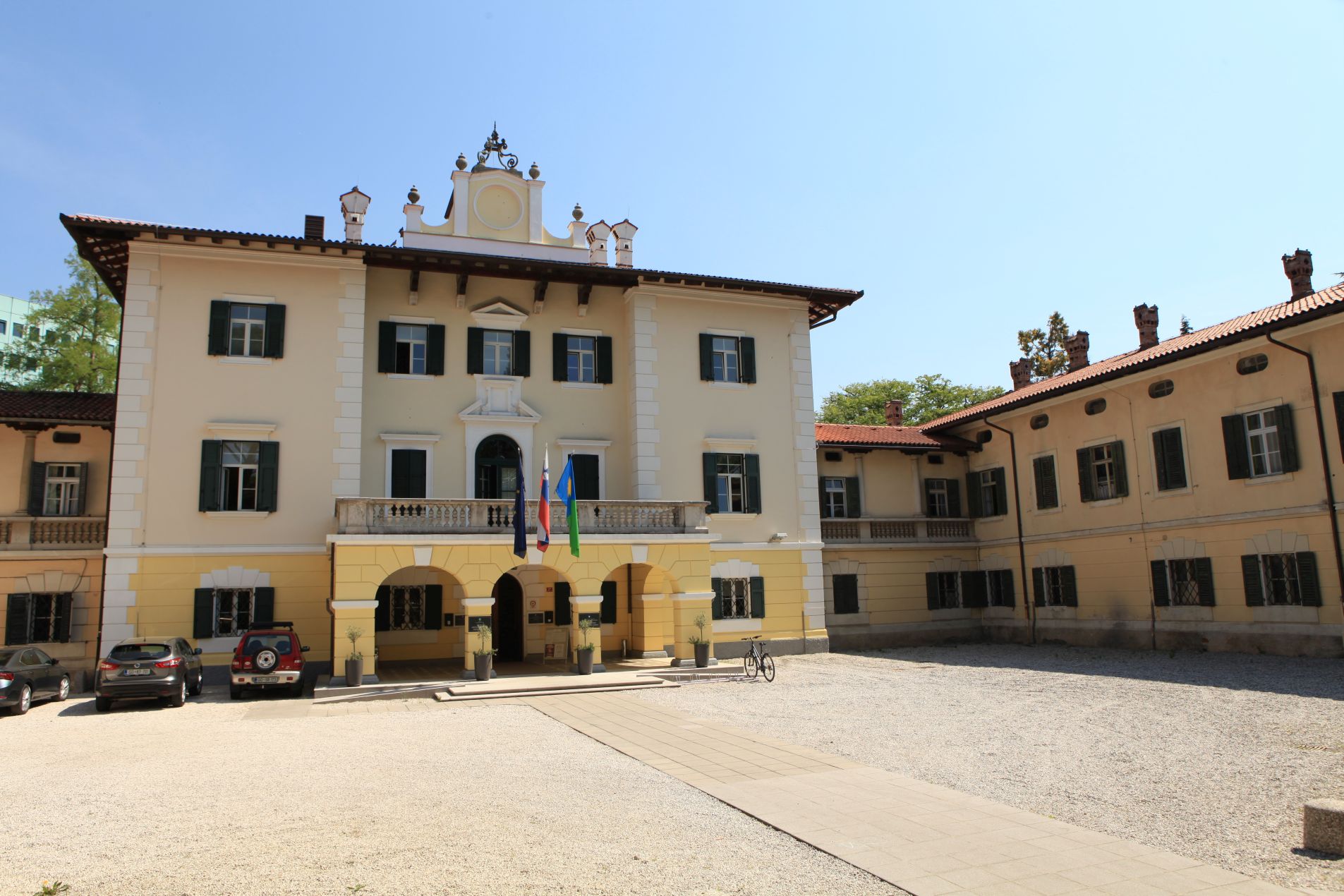
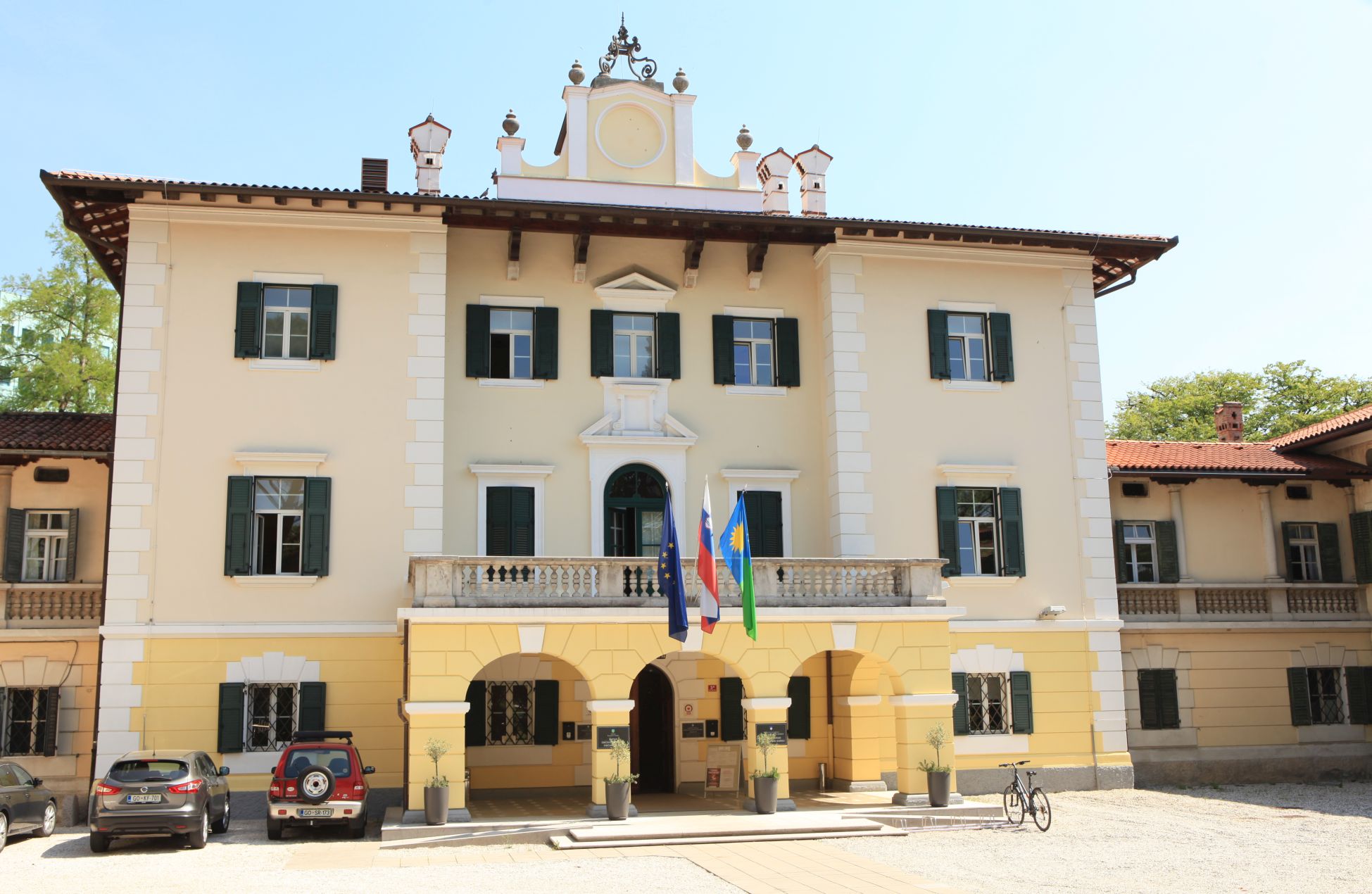
This noble home was possibly since the beginning a two-storey building with two avant-corps on either sides of the main façade. It underwent restructuring in the second half of the 18th century, when a double dog-legged stone staircase with a stone balustrade was built in front of the entrance, which is a typical Baroque representational form. A lush parterre with geometric shapes was laid out near the building, its northern part designed as a labyrinth. During this period, the Coroninis used the mansion primarily as their summer residence. The building was renovated again by Johann Baptist Coronini IV in the 1860s according to the trends of the period and as befitting his social status and reputation. The major change from that intervention was the construction of two side wings that enclosed the courtyard in front of the main entrance and gave it a representative character.
The mansion took on its current appearance after the First World War, during which it had been severely damaged. The plans for its reconstruction were drafted by the celebrated architect Max Fabiani, who sought to give the building an air of the Baroque villas of Friuli. This is considered one of his best works. However, the Coroninis never returned to live in the mansion as they were driven into deep debt during the renovation. For some decades now, the central part of the building has been the seat of the Šempeter-Vrtojba municipality, while the representational portion houses a gallery and a museum collection.