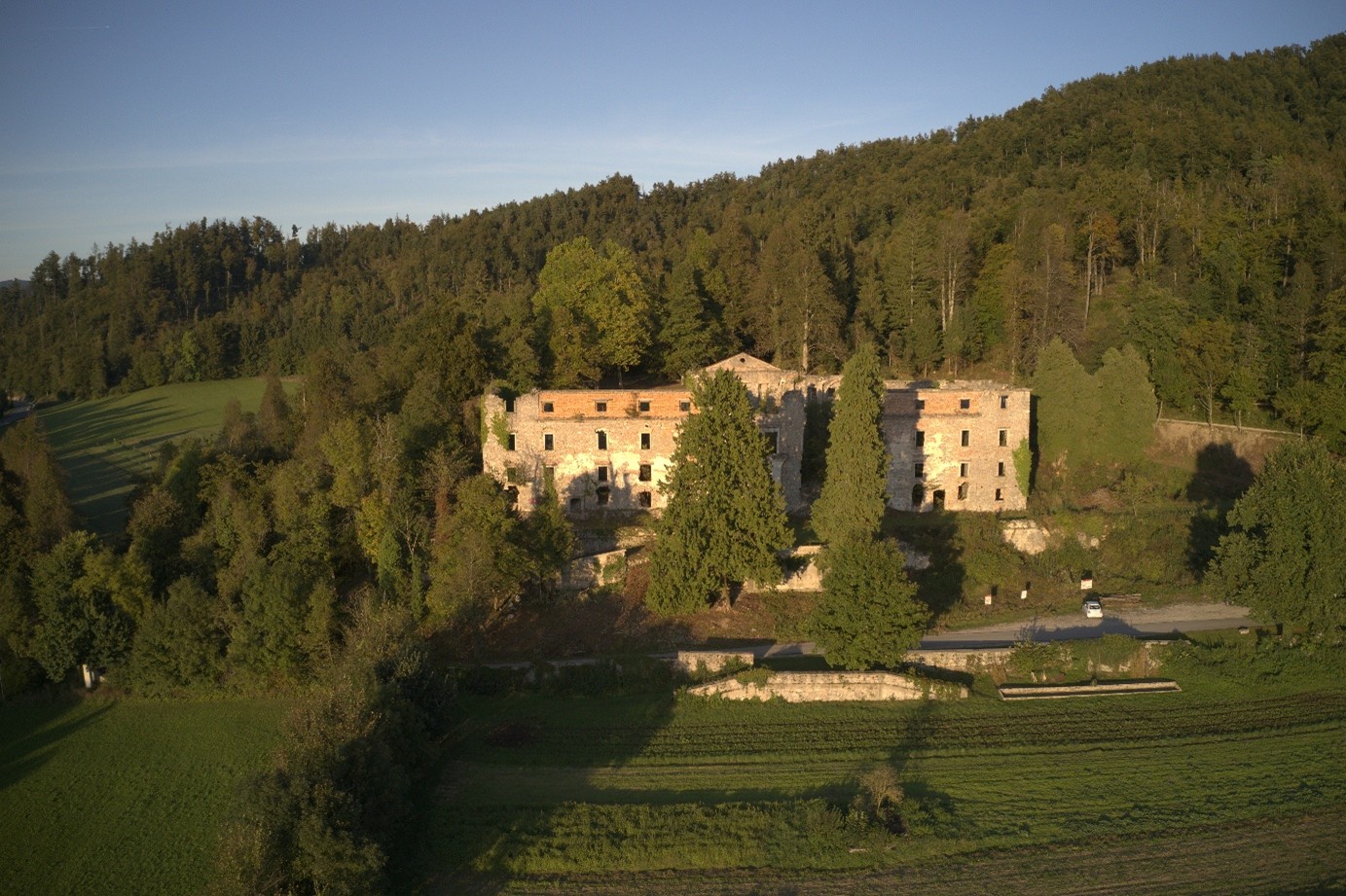
Description
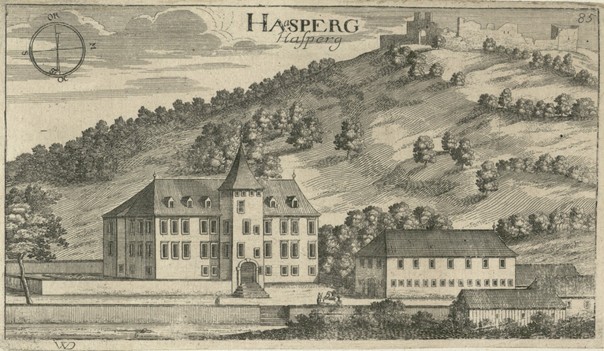
The old Haasberg Castle stood on a higher elevation at an important crossroads of the routes towards Logatec, Ljubljana and Cerknica, and towards the west, on land belonging to the Counts of Gorizia. It was built in the second half of the 12th century, while the castle is first mentioned in written sources in 1295. Various ministeriales or knights of the Counts of Gorizia lived there. In 1435, the castle and its domain were acquired by the Counts of Celje, and after their extinction, it passed to the Habsburgs, who sold it in 1587.
The Habsburgs had previously leased the domain to various nobles, and then in 1587 sold it to Georg Ainkhürn, who later sold it to the Hallers at the end of the 16th century, together with the domains of Logatec and Mali Grad. In between, ownership changed several times. A longer period of stability began in 1614, when Regina Eggenberg bought the estate. The Eggenbergs abandoned the highland castle, which was still completely preserved in 1603, and in the early 17th century built a new manor in the lowlands, on Planinsko polje (Planina Field or Basin).
The manor, together with the Logatec and Šteberk domains, was purchased in 1716 from Maria Charlotte, Princess Eggenberg, by the then Carniolan provincial governor Johann Caspar Cobenzl. Shortly after the purchase, a fire damaged the building, and his eldest son died a few days later from burns sustained in the blaze. Guido Cobenzl not only renovated the manor, which also became the centre of his extensive domain, but also transformed it into one of the most beautiful Baroque manor houses. He entrusted the task to the Friulian architect Carlo Martinuzzi.
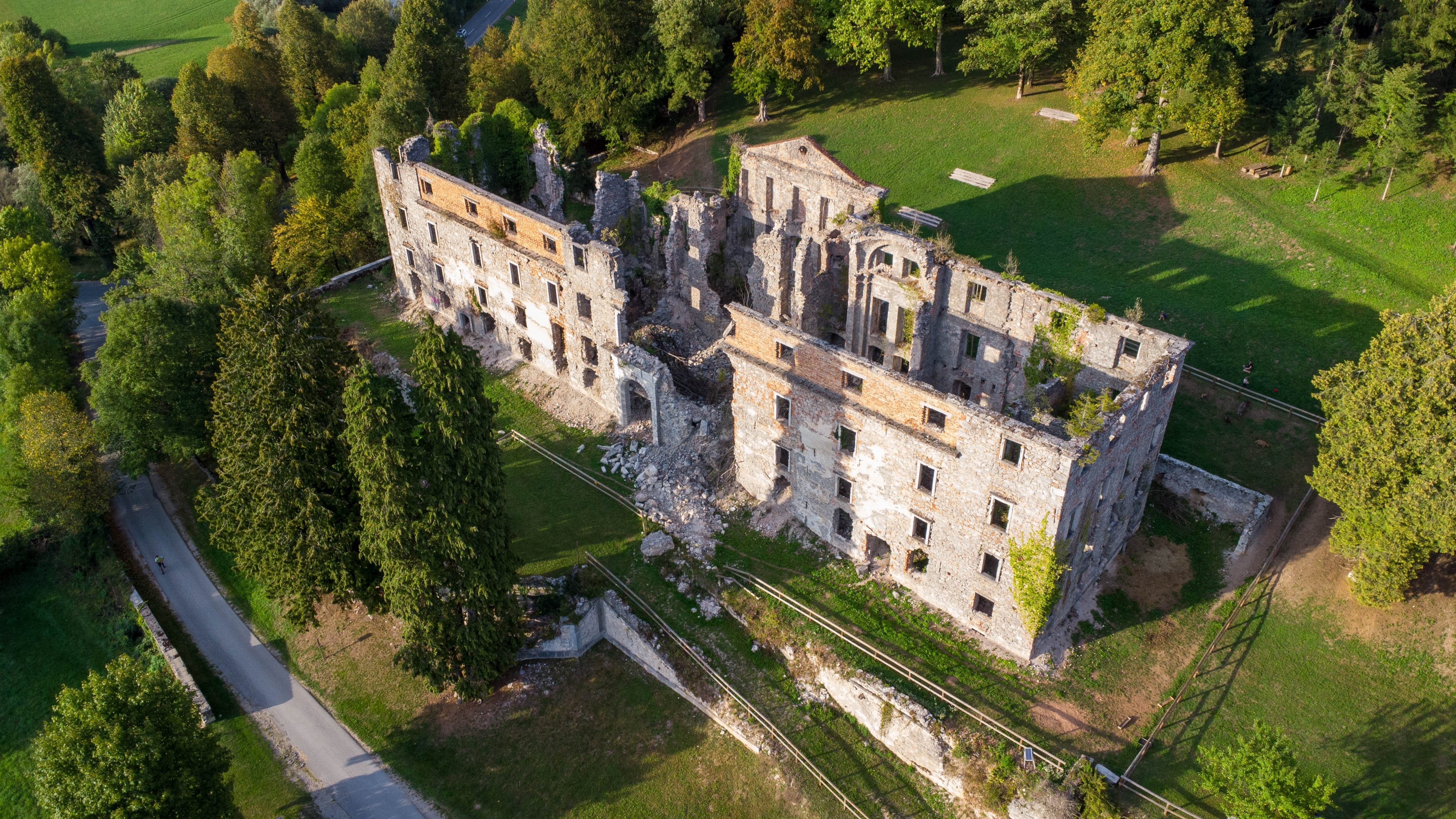
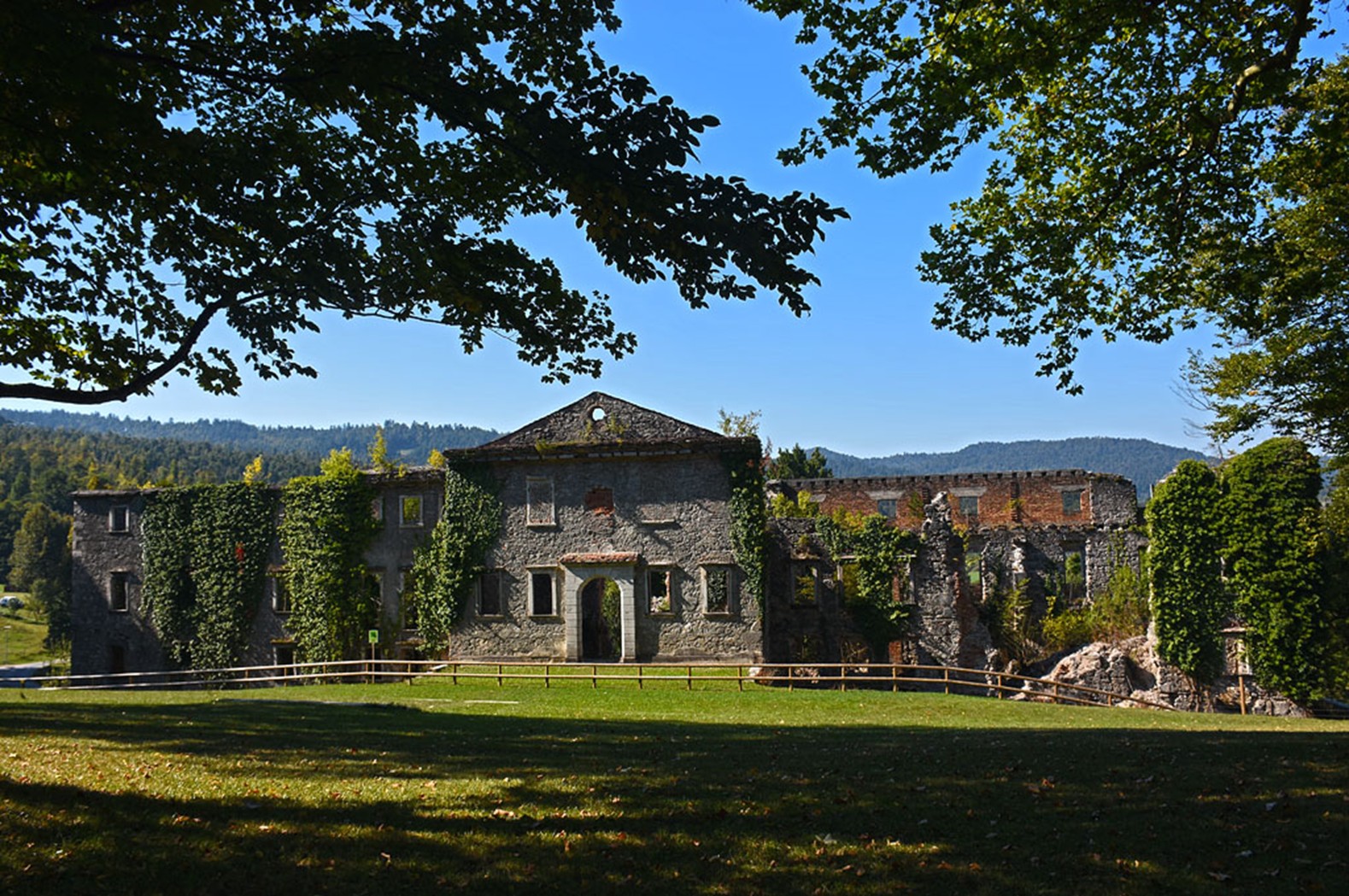
The Cobenzls remained the owners of the castle and the large domain until their extinction in 1810, when it was inherited by an underage relative, Michael Coronini. In 1846, it was purchased by the Windischgrätz family, along with the domains of Jama, Logatec, Šteberk and other associated properties. During the Second World War, the castle was occupied by German soldiers, and in 1944 the soldiers of the Partisan “Dolomite Detachment” burned it down, along with most of its furnishings. Only the lower two floors remained undamaged. After 1945, the castle came under the administration of the Ministry of Forestry, which planned its renovation but never realised it. On the contrary, much of the castle and its outbuildings, including the Windischgrätz family tomb, were gradually demolished or left to decay. In the 1980s, however, the rooms along the southern façade were renovated, and half of the garden façade was fortified.
The Haasberg (Hošperk) manor was surrounded by a carefully landscaped park that extended to the banks of the Unica River, connected to it by a bridge. In terms of composition, the entire manor and park were conceived from a viewpoint along the cypress-lined avenue leading to the two-flight staircase in front of the manor.
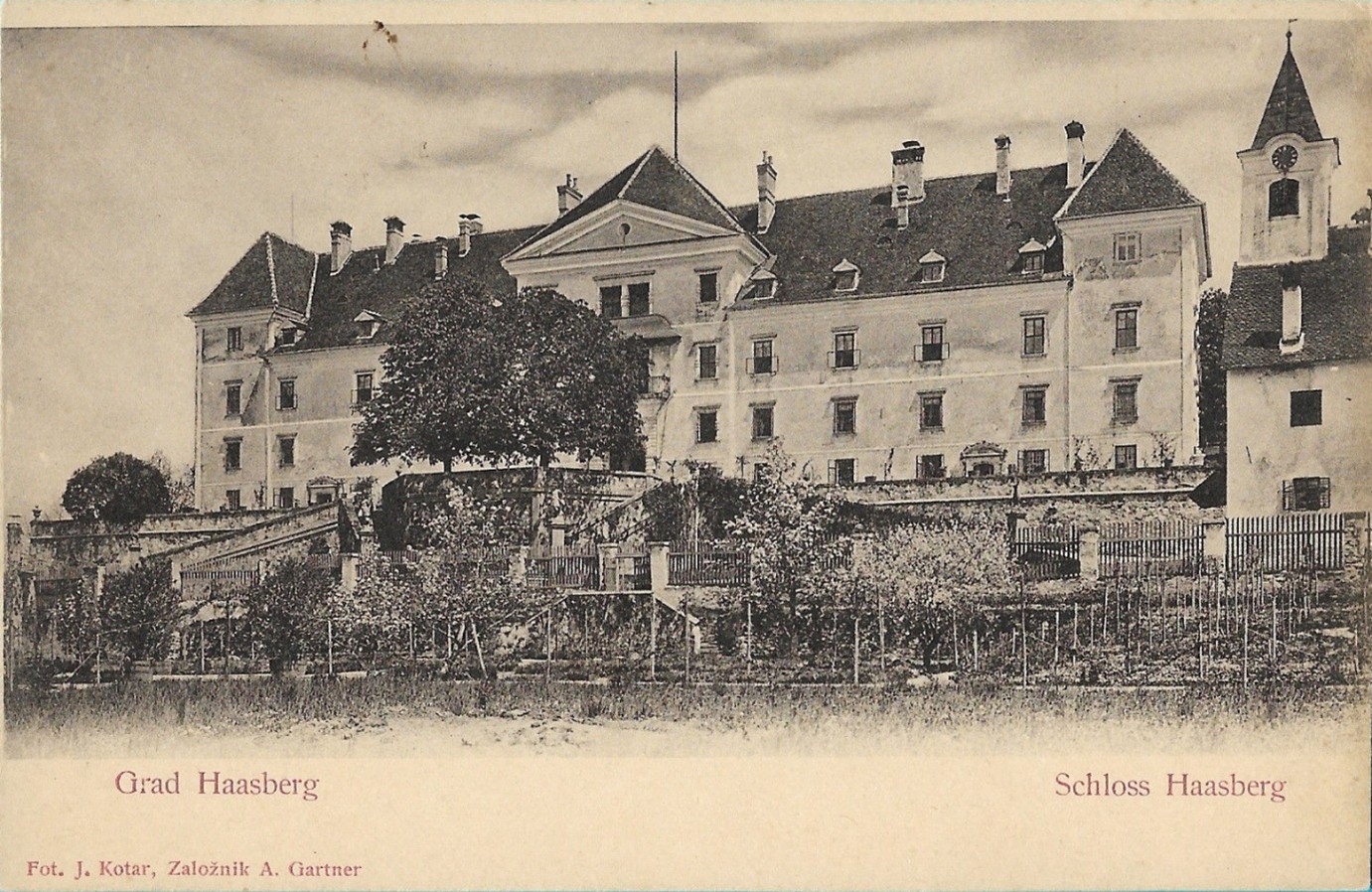
The manor had a rectangular floor plan. It had two floors, or three in the accentuated sections of the façade (risaliti). The façade was divided by bands of rectangular window openings. The risalit was distinguished by a semicircular portal accentuated by a roof, a bifora on the third floor, and a triangular pediment. The interior was symmetrically designed. Behind the portal was a vestibule, arched with a wooden console gallery, extending through two floors. At the back of the vestibule, a three-flight staircase connected the levels of the vestibule and portal with the ceremonial hall on the second floor.
The representative space of the castle was the ceremonial hall, which extended through two floors. In the southern part of the castle stood the chapel of St Anthony of Padua, which rose through three floors and was covered with a dome. The castle’s annex building, which housed the stables and featured a roof tower with a clock (added in the 18th century), was also considered one of the longest vaulted rooms in Slovenia. The building had a rectangular design; its ceiling was cross-vaulted, with the vaults resting on slender stone columns.