Description
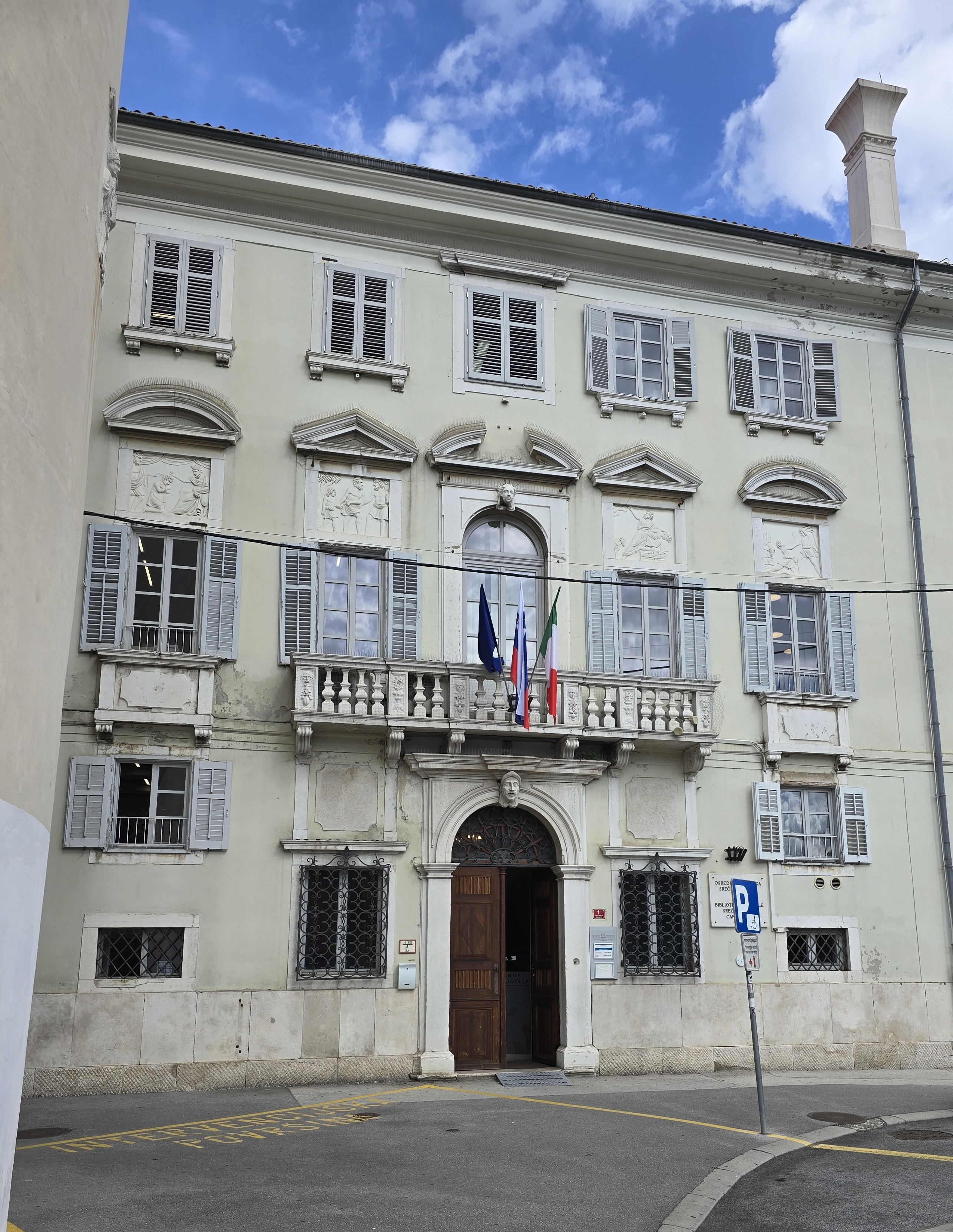
The palace, located on the northern edge of Brolo Square, was designed by the then-established Venetian architect Giorgio Massari, the author of the Grassi Palace in Venice, which is stylistically related to the Bruti Palace. Massari is said to have made plans for the Bruti Palace in Koper in 1714. The palace was certainly under construction until the fifth decade of the 18th century, as the expansion of the cathedral choir towards the palace met with the disapproval of Bishop Bruti.
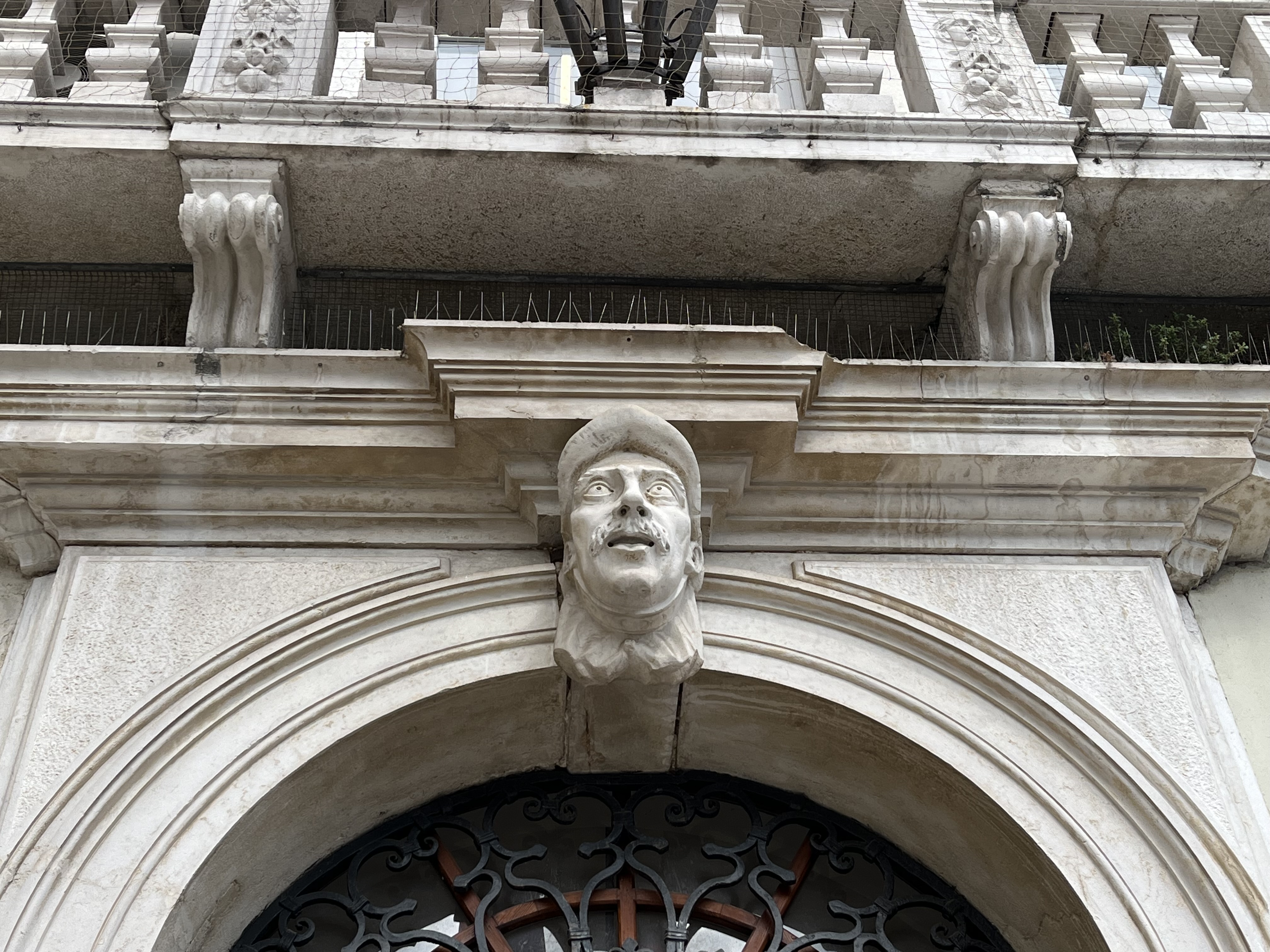
The importance of the family is already evidenced by the choice of the location of the palace – on the site of the former cemetery of the Augustinian monastery, as well as near the episcopal palace. The palace is built following a traditional Venetian design. The mature Baroque image of the main façade is visible in the emphasized central part and in the concentration of window openings. The serliana on the ground floor (portal) and the first, noble floor with a balcony decorated with reliefs also stand out. In the portal’s keystone is a stone head of a man, most likely Antonio II Bruti, the founder of the family on the territory of the Venetian Republic. In the keystone of the balcony door we find a stone female head with the attributes of the ancient goddess Artemis, most likely representing Antonio’s wife Maria Bruni. Above the balcony serliana there was once a family coat of arms, which is now built into the Almerigotti Palace.
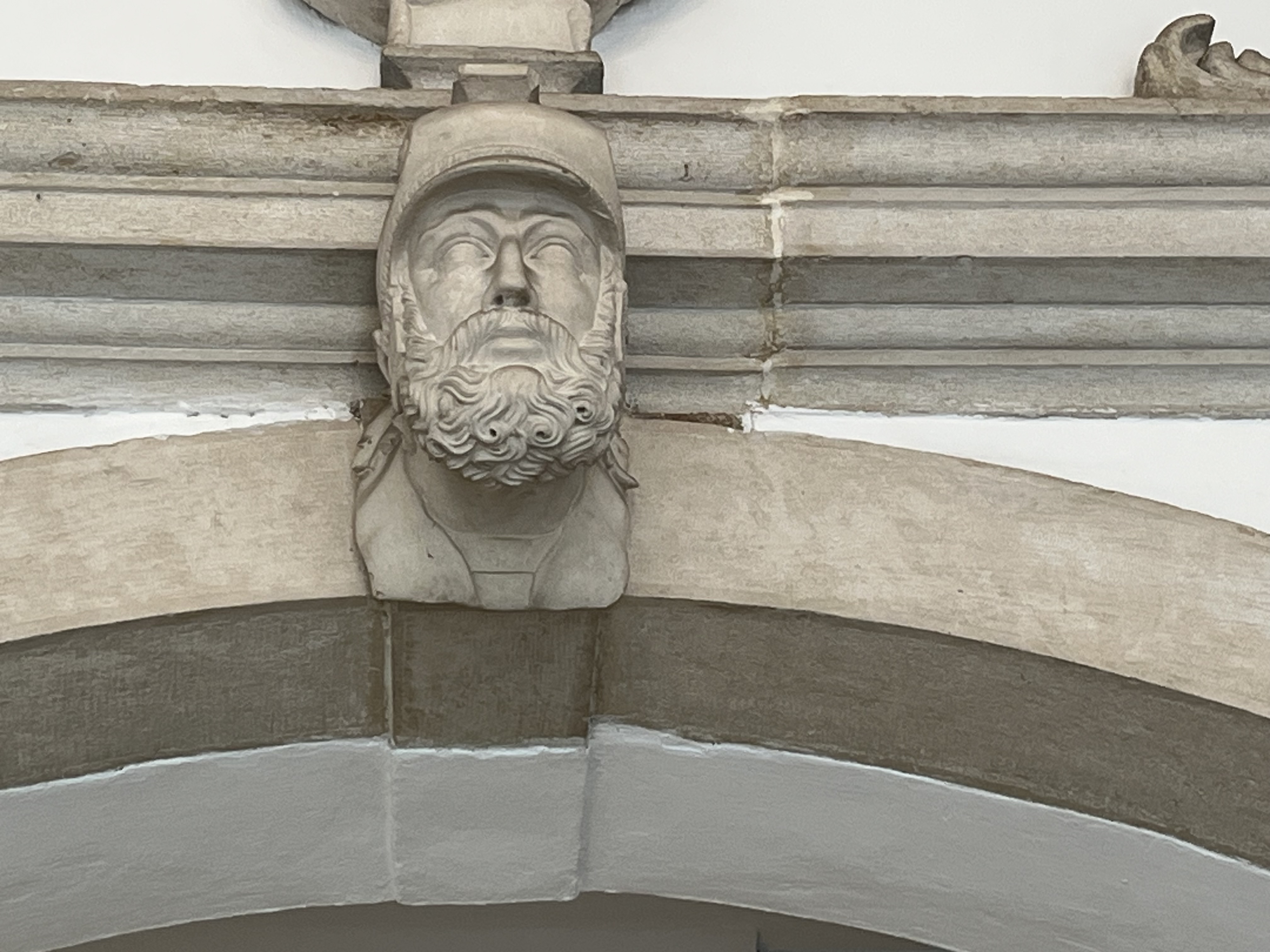
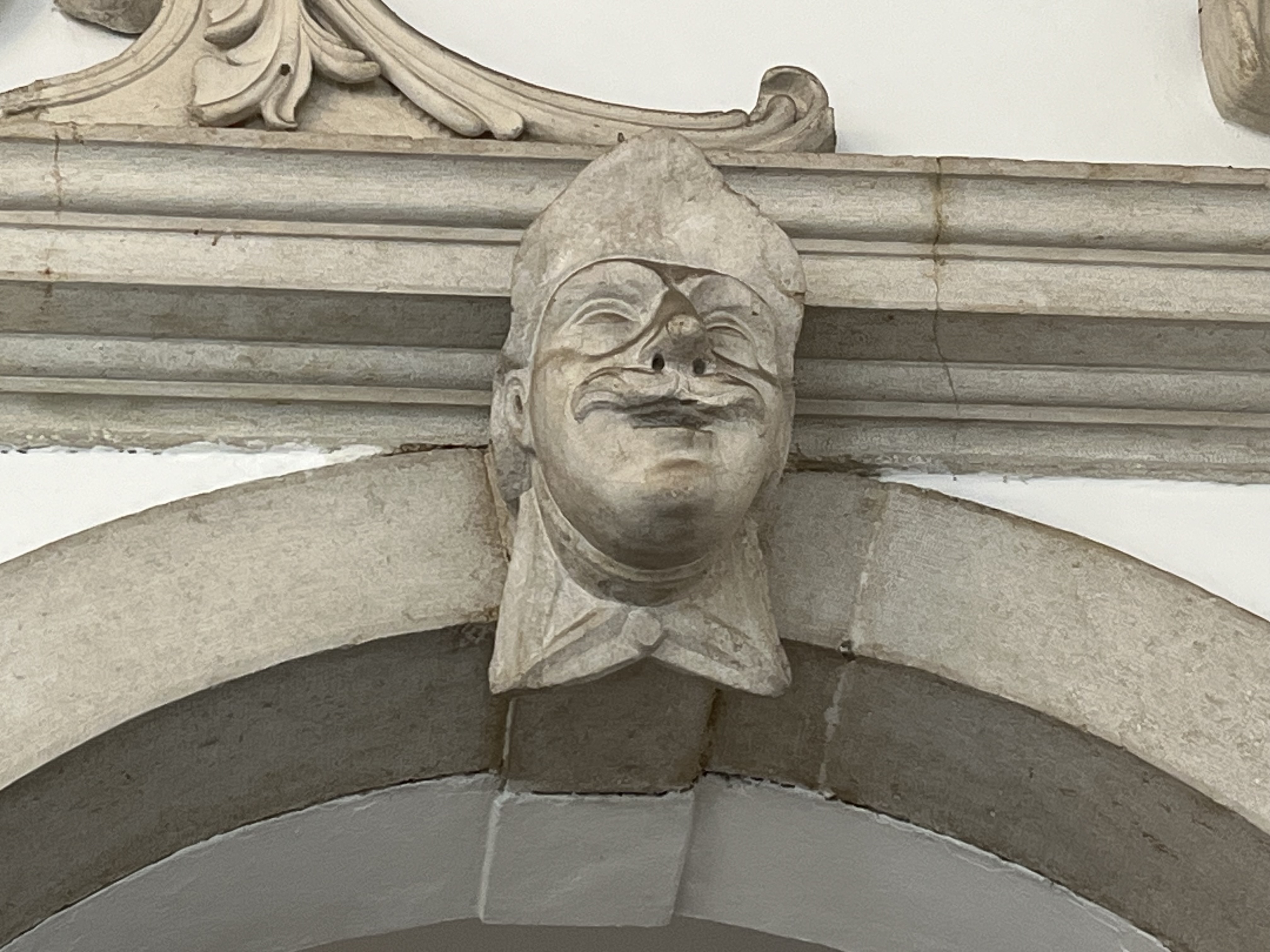
The interior was also very rich. The atrium opens out of three arcades, from where a balustrade staircase leads to the first and second floors. The stone arches in the side arcade are adorned by keystones with stone heads of moustachioed soldiers, most likely Marco and Giacomo, sons of Antonio, the founder of the Koper Brutis. In 1899, the palace was purchased from its then owners by the Congregation of the Sisters of St. Clare of Udine, who renovated the palace. At that time, they built smaller windows and inserted reliefs with scenes from the Old Testament, cast in artificial stone. The side staircase in the upper part was also demolished, and the stone heads of Giacomo and Marco Bruti were moved to the atrium. When the Congregation was abolished in 1948, the current Koper Library moved there from the Belgramoni–Tacco Palace. In the years 1977–1979, it underwent a complete renovation, with the interior being arranged in such a way that it became friendlier and more convenient for the operation of a library and more comfortable for its users and employees.
The Bruti family had several domains in the Koper hinterland. In the eastern part of Ankaran, the long, narrow, one-storey Bruti Villa with a Baroque façade still stands today. It has recently been incorporated into a series of residential houses. They also owned a villa east of Dekani, along the main road on the right bank of the Rižana, where a mill building once stood. It was built around 1700 by the Borisi family, then passed into the ownership of the Bruti family and later the Sardoč family; today a multi-apartment complex stands in its place. Among their estates, lands in Olmo and a smaller villa in the scattered hamlet of Bonini near St. Ubaldo are worthy of mention. All of these domains were left by Countess Lodovica, widow and heiress of Count Barnaba Bruti, to the brothers Marco, Alvise and Innocente de Almerigotti instead of her relatives after her death in 1843. These brothers had their palace in the borough of St. Martin, between today’s Ressljeva and Kidričeva Streets. On its corner, the coat of arms of the Bruti family can still be seen today.