Description
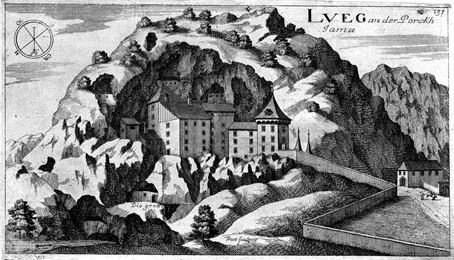
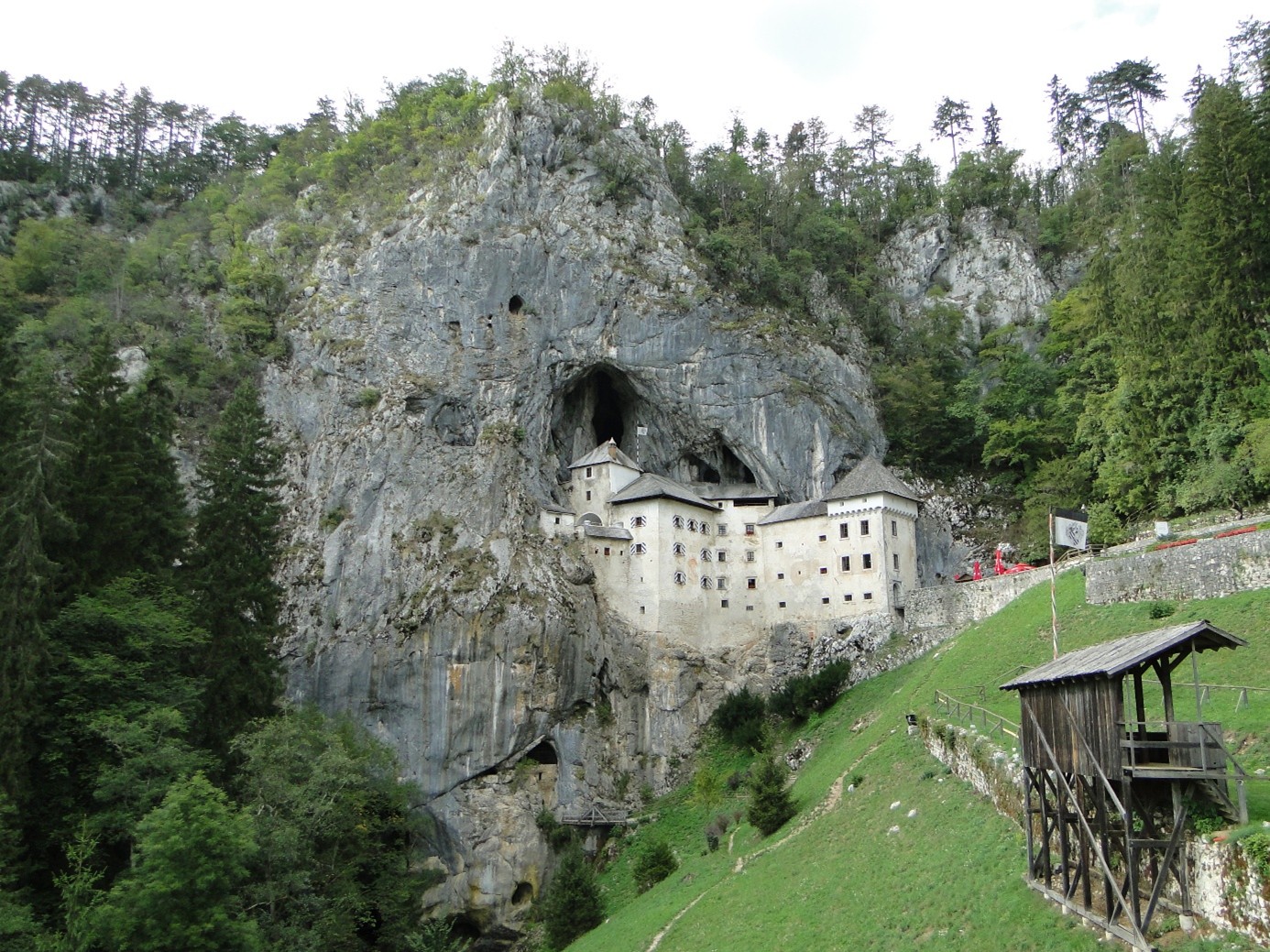
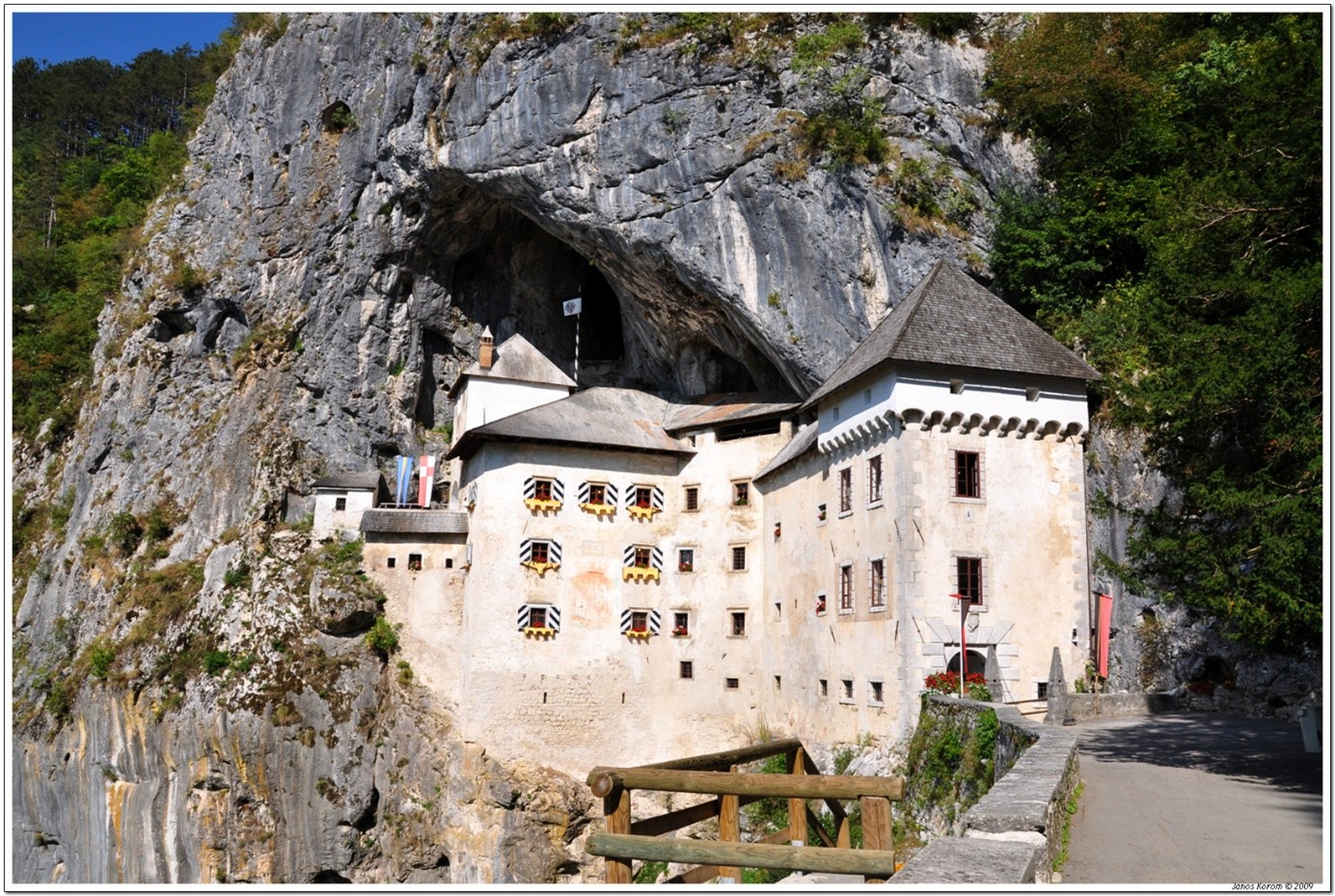
Jama Castle is considered the only fully preserved cave castle in Europe. It stands above a sinkhole and partly within a karst cave beneath a steep rock face. Already in the 18th century, it was regarded as a notable landmark, probably because it was detached from the other properties of the Cobenzl family, who used Štanjel Castle and Lože Mansion, as well as houses in Gorizia and Ljubljana, as residential mansions. It was probably considered a prestigious hunting lodge at least from the mid-17th century until the end of the Second World War. As such, in 1728 it hosted the highest court nobility, who, like Johann Caspar II Cobenzl, formed part of the retinue of Emperor Charles VI on a months-long homage journey, when the emperor visited the capitals of the provinces and major cities from Styria to the sea.
The first mention of the castle dates back to 1247, when the Patriarch of Aquileia had it built on the site of the older Luegg Castle. In the 14th century, the estate passed into the ownership of the Habsburgs; from then onward, Jama Castle was held by the Luegers – the “Knights of Jama”. Among them were Niklas Lueger, the governor of Duino, who dealt harshly with the rebellious people of Trieste, and his close relative Erasmus of Predjama, known as “the last robber knight”, who was killed by a ruse in 1484. The domain was subsequently occupied by various tenants for almost a century. However, in the mid-16th century (1567, 1589), Johann Cobenzl received it as a pledge from the ruler, partly as payment for his official and diplomatic services: among other things, he served as a Habsburg diplomat in Russia. After the extinction of the Cobenzl family, the owners of the domain were the same as those of Hošperk, Logatec and Mali Grad. After the Second World War, the castle was nationalised, and its management was linked to the Postojna Cave.
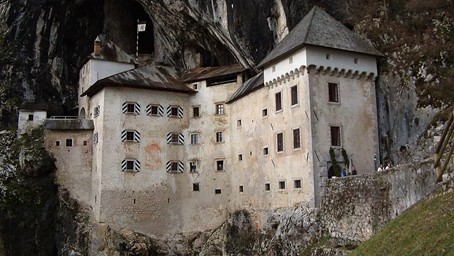
The castle acquired its present appearance after eight phases of construction, which took place between the 12th and 20th centuries, from the Romanesque to the Renaissance, with later renovations. The complex consists of several buildings with rectangular and square ground plans. The oldest (Romanesque) part of the castle is represented by the construction of the exposed entrance tower and two floors of the three buildings on the north-west side, i.e. the defensive wing and the residential part (the building with the knights’ hall and the central hall), and the building with living quarters. The Romanesque design of the castle is evidenced by the layered masonry made of rough stone and the portal with a flat lintel in the defensive wing of the castle; the slots for the lowering chains of the drawbridge have also been preserved.
During the Gothic period, the supporting walls were thickened so that the castle could be built up in height. The Gothic phase is evident in the interior decoration of the dining room and the knight’s room, where wall niches with triangular fronts were discovered, typical of living spaces in the 13th century. During the Renaissance, existing buildings were raised (e.g. the courtroom, the prince’s room, the chapel of St Anne and the sacristy), and a corridor (so-called gank), a defensive tower, a Renaissance kitchen and a hall were added to the northern part of the castle. A Renaissance double window has been preserved next to the portal of the castle chapel of St Anne, which allowed a view into the chapel.
A Renaissance tower was built during this phase as well, pressed against the vertical wall below the castle, which is named after Johann Cobenzl. The castle took on its present appearance in the renovation after 1716, when Johann Caspar II Cobenzl restored it, as he did his other mansions and castles. In the second half of the 19th century, the Windischgrätz family roofed the inner courtyard. The last comprehensive renovation of the castle took place between 1990 and 1996, according to the plans of the architect Marjan Laboda.