Description
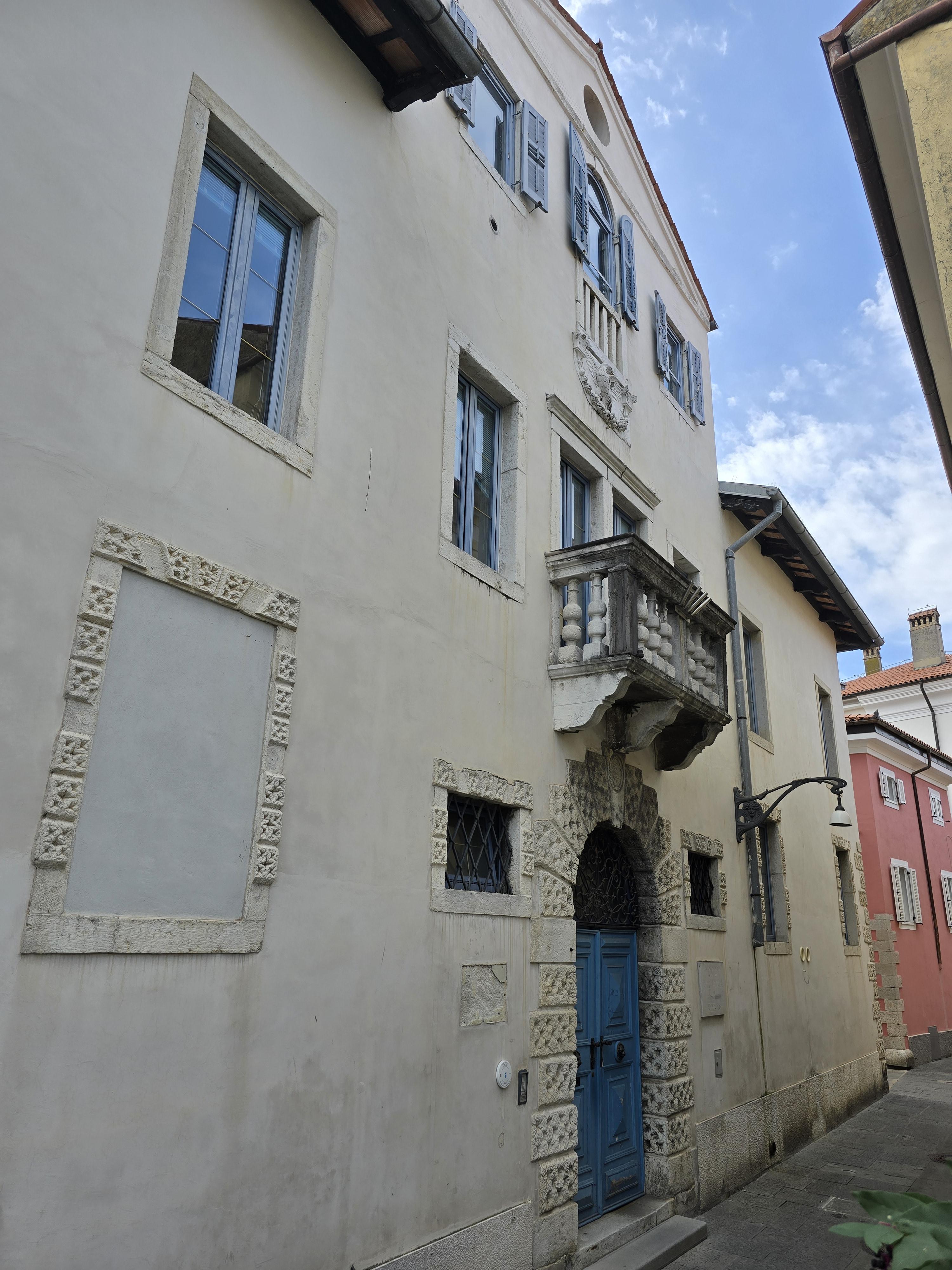
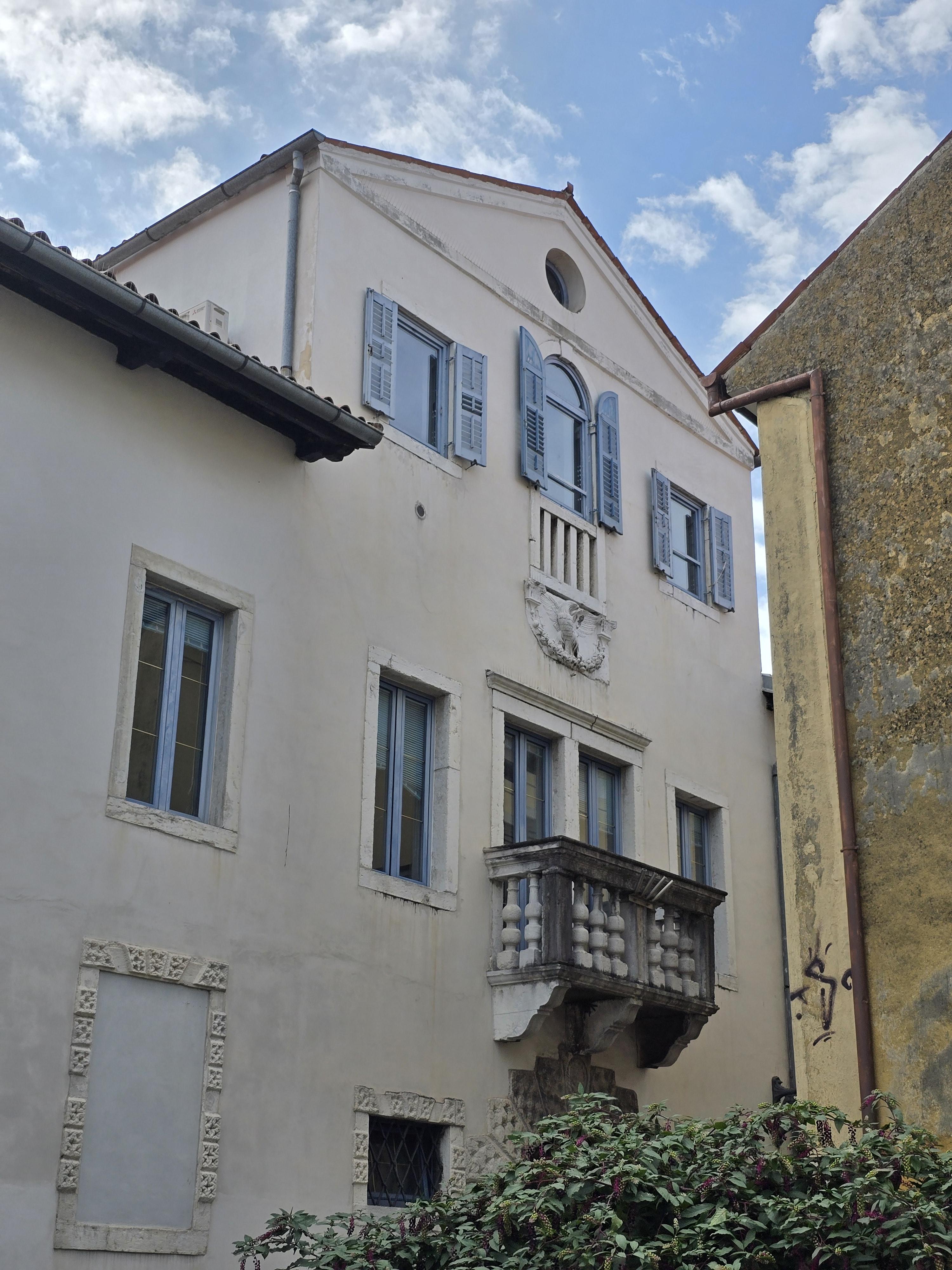
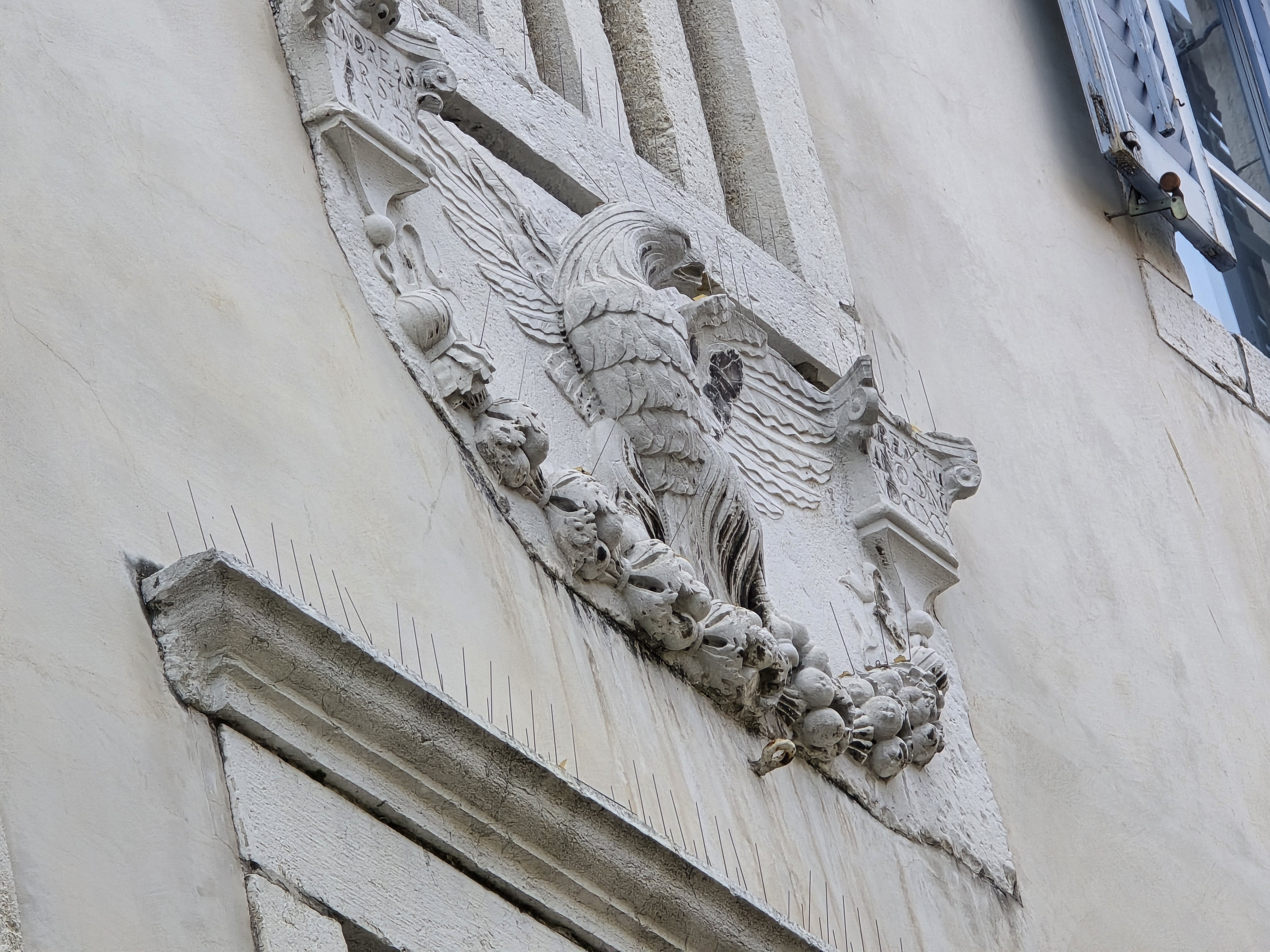
The palace, located in the Pusterla area, was named after the large gardens (Orti grandi). It was originally owned by the Percico family of Oprtalj. In the 17th century, the palace was bought and renovated by Andrea Tarsia. At that time, for example, the main façade received a new semicircular portal around the entrance with a rustic border and an inscription of the year 1669, a balcony, and a relief of an eagle with spread wings on the second floor, just below the triangular finial. Andrea Tarsia also had the inscription Andreas Tarsia IUD Erexit Anno Dni MDCLXX carved on the consoles under the relief of the eagle with spread wings.
Under the window on the third floor of the palace, one can see a built-in eagle with spread wings, which was part of the tombstone of Jacopo Tarsia, who died in a clash with a Turkish galley near Corfu at the end of the 15th century. In addition to Jacopo, Girolamo Tarsia was also in military service at that time as commander-in-chief of the infantry.
The entrance hall was decorated during the Baroque period as well. During the most recent restorative and protective works, traces of illusionistic paintings imitating architectural elements were discovered. The sculptural ceiling decoration was later destroyed, and the collection of portraits of the “famous ancestors” of the Tarsia family by the Koper painter Natale Bartolini—also part of the Baroque decoration of the palace—is today on display in the Koper Regional Museum.
The Tarsia family held important positions in the Grand Council of Koper, having possessed their title of nobility since the 13th century. In the 17th century, it was also one of the better-known families of Venetian dragomans—diplomatic servants in Istanbul—who acted as translators and diplomatic assistants to Venetian ambassadors (baili) in Istanbul. Dragomans collected and translated information about commercial and political affairs. They were educated in both the language and the cultural customs of the Ottoman Empire, so their service made them true cultural mediators.