Description
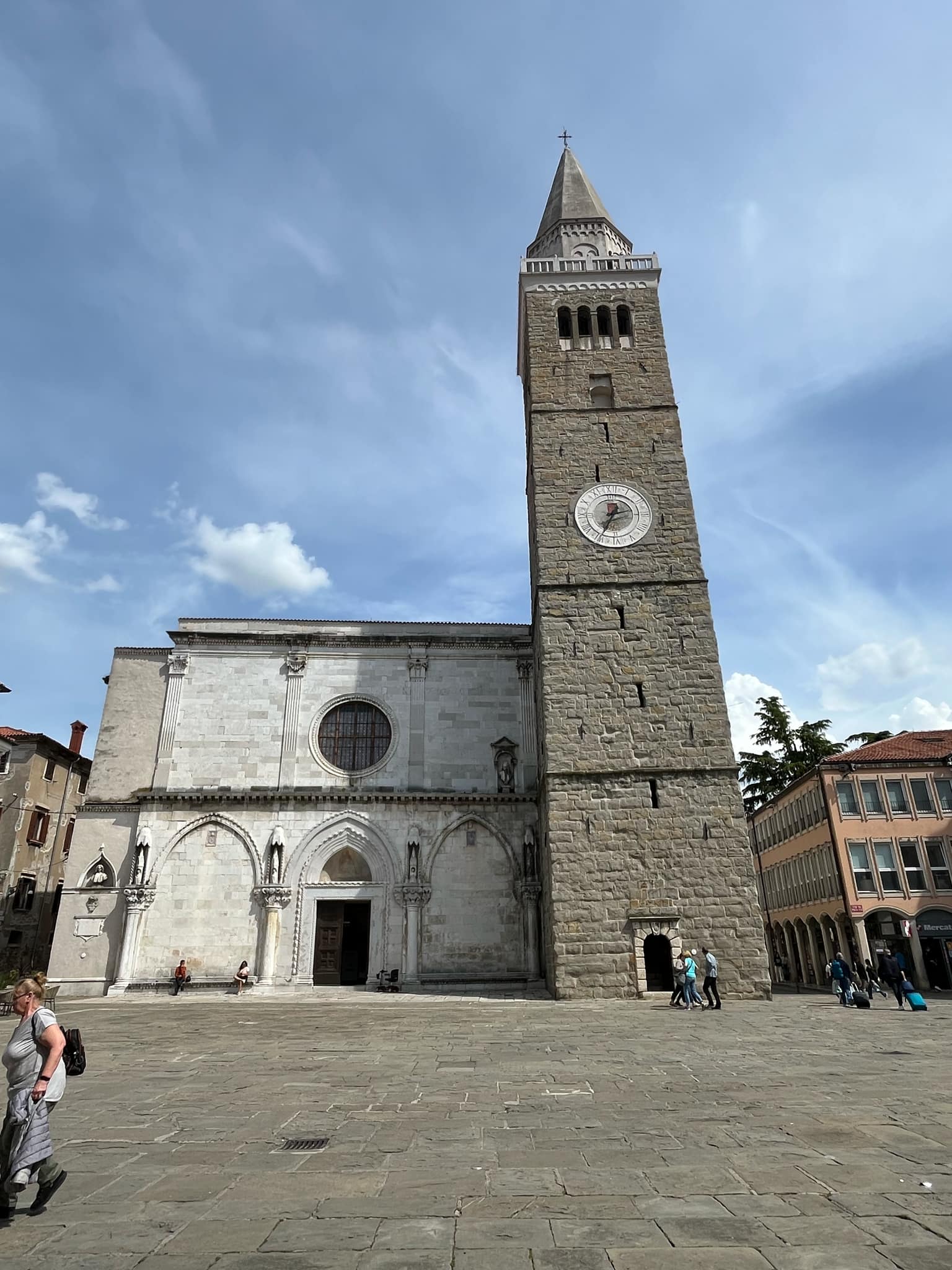
The architectural history of Koper Cathedral may date back to the early Middle Ages. In the High Middle Ages, it had the appearance of a Romanesque three-nave basilica. The position of the Koper Church was strengthened after 1186, when the city gained autonomy, and especially the following year, when the Koper Diocese separated from the Trieste Diocese after several centuries. The Gothic renovation up to the mid-15th century was the result of damage caused by Genoese plundering. Today we can admire the main façade of Koper Cathedral, the ground floor of which is in the Venetian Gothic style of gotico fiorito, while the upper floor is in the spirit of the early Renaissance. Before the consecration of the Gothic-remodelled church, the stolen relics of the patron saint and first bishop of Koper, St. Nazarius, were returned from Genoa.
The cathedral was also thoroughly remodelled later. The baroquization of the 17th and 18th centuries took place in three phases. The first phase of the renovation covered only the church choir and was commissioned by the Bishop of Koper, Paolo Naldini, in 1690 from a Venetian architect named Francesco. Naldini wanted to revive the custom of the church synod — the diocesan assembly of priests — which took place in the church choir. This is most likely why the need for a larger choir arose. Naldini did not live to see the new church choir, as construction officially began in 1715 and lasted until 1722.
The next phase of baroquization was encouraged by the synod of Bishop Agostino Bruti fifteen years later. At that time, the best architect of church buildings in the Venetian Republic, Giorgio Massari, was commissioned to renovate the nave, as the difference between the new choir and the older basilican part of the church was particularly obvious at the synod. In 1737, construction began on a three-nave hall, while Massari, on his own initiative, planned a new, even larger choir, which sparked disputes between the city and the bishop, even involving the Doge. As a result, construction took more than a decade.
Massari was probably never in Koper and monitored the renovation work from a distance. The construction was actually led by the Friulian architect Lorenzo Martinuzzi (new nave, 1738–1742) and later Domenico Schiavi (choir, 1749). Lorenzo and his brother Giovanni were the sons of Bernardino and thus participated in the construction of the cathedral from the first Baroque phase onward. Giovanni collaborated with his father in the construction of the Jesuit church in Rijeka. Lorenzo was forced to leave the construction site of the Koper Cathedral due to poor management, and Domenico Bertini took over the work. Francesco Schiavi added Rococo stucco to the eastern part of the church in 1750. The Gothic and Renaissance façades were preserved despite Massari’s ambitious proposals for a new façade. Massari effectively combined the medieval church and bell tower with a modernized Baroque church.
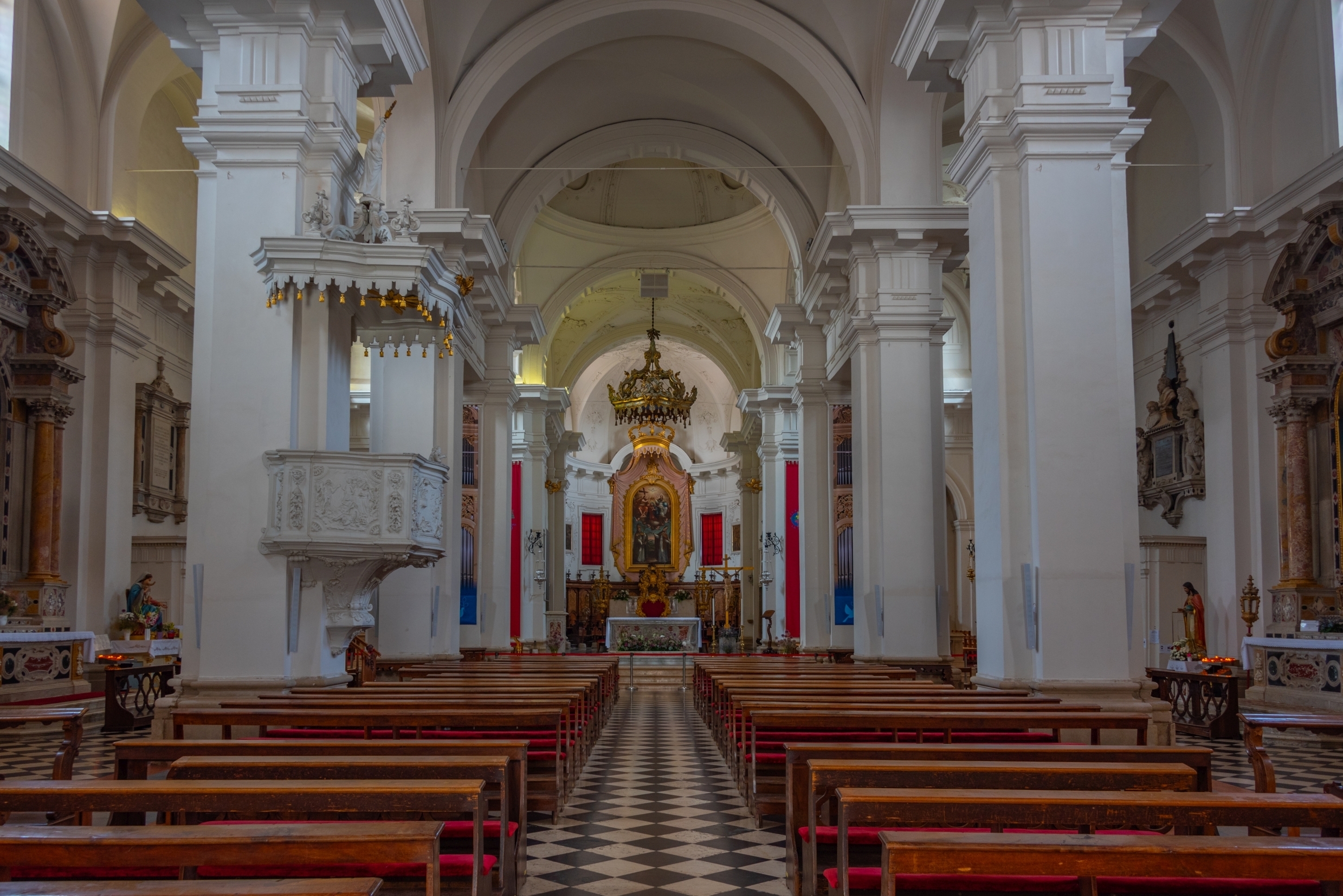
The architectural interior of the church is bright, spacious, and airy in a classicist manner, as evidenced by the Doric columns, arches, and arcades. The rhythm of the architectural elements is dictated by the profiled wall that runs around the entire interior and seemingly divides the space into two parts (wall and ceiling). In 1750, the baroquization of the Koper Cathedral was completed.
Besides the above, Baroque is evident in the busts and decoration of the Bruti family tomb from 1696 on the south wall of the cathedral. Other rich Rococo monuments in the church include the seemingly stone but actually wooden pulpit, made in 1758 by Lorenzo Farolli, and the wooden bishop’s throne, made around 1730.
Today, the cathedral houses numerous Baroque works of art from several of Koper’s monastery churches, transferred there around 1806–1807. After the Baroque renovation was completed, the cathedral had nine altars (three in each aisle, two on each side of the transept, and the main altar in the choir), although their arrangement has since changed somewhat. Today, the following can be admired in it:
- Main altar (Giorgio Massari, Gasparo Albertini, 1788–1790);
- Chapel to the left of the choir: altar of the Holy Sacrament (first half of the 18th century; provenance: former church of St. Clare; painting behind the altar: Francesco Pavoni);
- Chapel to the right of the choir: altar of the Sorrowful Mother of God (originally the altar of St. Jerome; architect: Alessandro Tremignon, 1669–1670; later a wooden statue of the Pietà, transferred from the Servite church, was placed in the altar);
Left aisle:
- Altar of the Holy Cross (early 18th century; provenance: former Servite church; today housing a crucifix by sculptor Scipione Biggi, 1894);
- Altar of St. Mark (architect: Giorgio Massari; sculptor: Giambattista Bettini, 1743–1749; painter: Stefano Celesti, 1638);
- Altar of St. Jerome (painter: Pietro Liberio; architect: Alessandro Tremignon, around 1670; provenance: former Dominican church);
Right aisle:
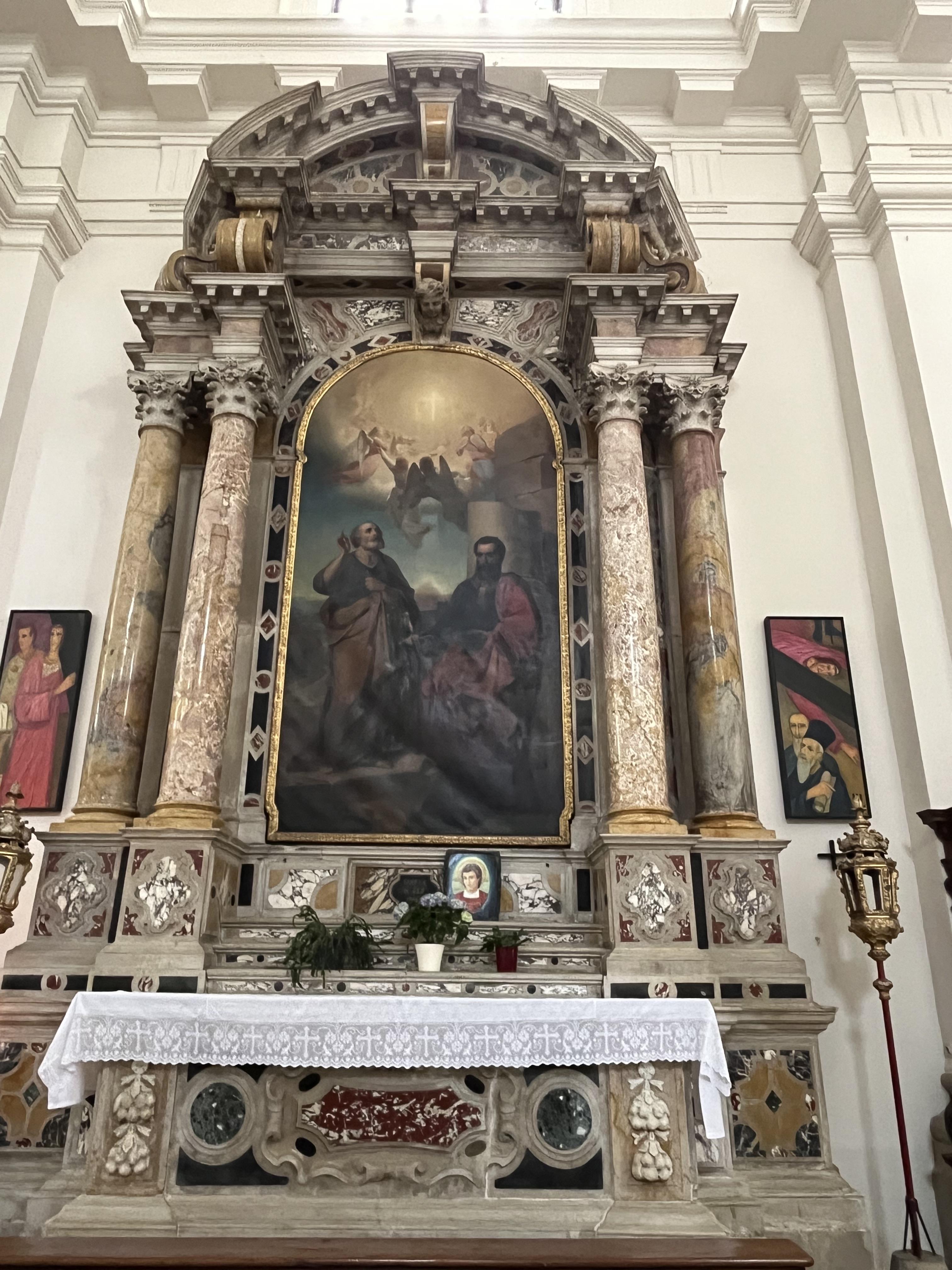
- Altar of St. Peter and St. Paul (first half of the 18th century; provenance: former Servite church; painter: Bartolomeo Gianelli, who copied the original painting of St. Philip and St. Augustine in the 19th century);
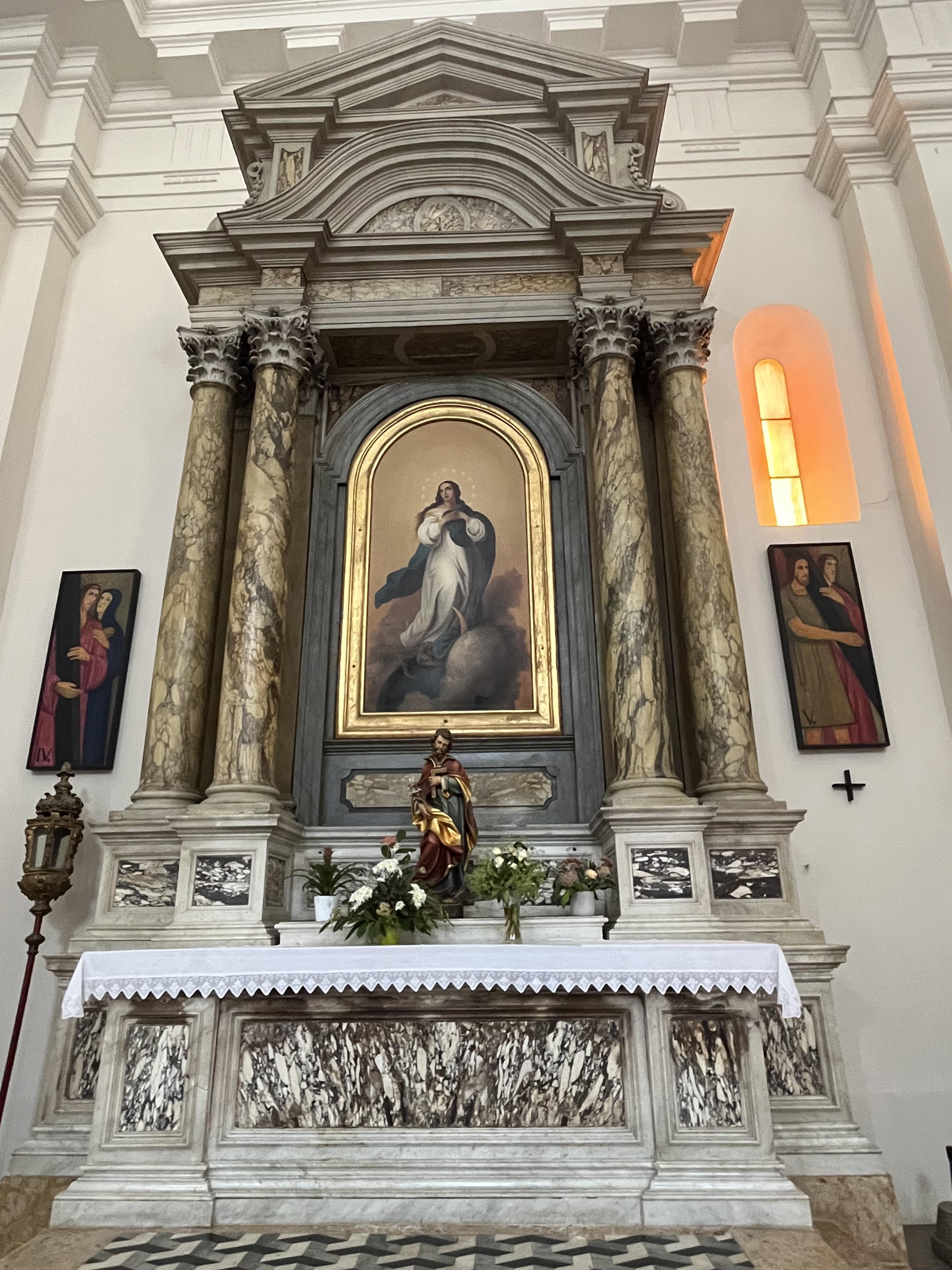
- Altar of the Immaculate (originally the altar of St. Rochus; architect: Giorgio Massari, 1748–1751; in the 19th century the dedication changed — first to St. Louis, and then to the Immaculate; today it features an altarpiece by Bartolomeo Gianelli, 1854);
- Altar of St. Barbara (commissioned by a brotherhood of artillerymen, 1668 and 1673; enlarged in the 18th century; provenance: former Dominican church).
Address
Activities
Map