Description
The Verda de Olivis or Verdenberg family (not Werdenberg) immigrated to Gorizia in the 16th century. The most prominent member of the family, Count Johann Baptist Varda von Verdenberg (1582–1648), lived in Gorizia only until he was fourteen, after which he went to Graz in 1596. After studying with the Jesuits there, he began his career in Gorizia, where he was in charge of collecting taxes as a fiscal officer, and soon became a financial official in the lands governed by Archduke Ferdinand. When the latter became emperor, Johann Baptist went to the imperial court as one of the privy councillors, where his career rose sharply: as the chief secretary of Emperor Ferdinand II (1620–1637), he became both politically influential and increasingly wealthy.
In addition to numerous lordships in present-day Upper and Lower Austria and the confiscated domains of the rebellious nobility in Bohemia, he was a member of several provincial diets. The acquisition of these offices was also associated with noble status, and he was therefore granted the title of baron soon after taking up his service in 1623. In accordance with his high position at court, his Bohemian domain of Namiest was elevated to a county in 1630. In 1616 he married Katarina Coronini Cronberg, from a noble family of Gorizia.
In 1629, he and his wife responded to a request from the rector of the Jesuit College in Gorizia, Tommaso Polizio, which had been addressed to the empress’s confessor, Father Luca Fanini. The rector had asked him to find a donor at court to establish a support fund for students. The couple donated the wife’s dowry – the Gorizia palace with its extensive garden – to the Jesuits, and contributed a further two thousand guilders for its renovation. In addition, Johann Baptist Verdenberg donated 20,000 guilders from his domains in Austria and Bohemia, from which scholarships were paid as annual annuities to twelve talented students of poor noble birth, at least twelve years old, who could stay in the Jesuit boarding school free of charge for the entire seven-year period of their study. From the funds he contributed, the students were also required to wear sky-blue robes. These were, however, not associated with any requirement to join the Jesuit order or the ranks of the clergy.
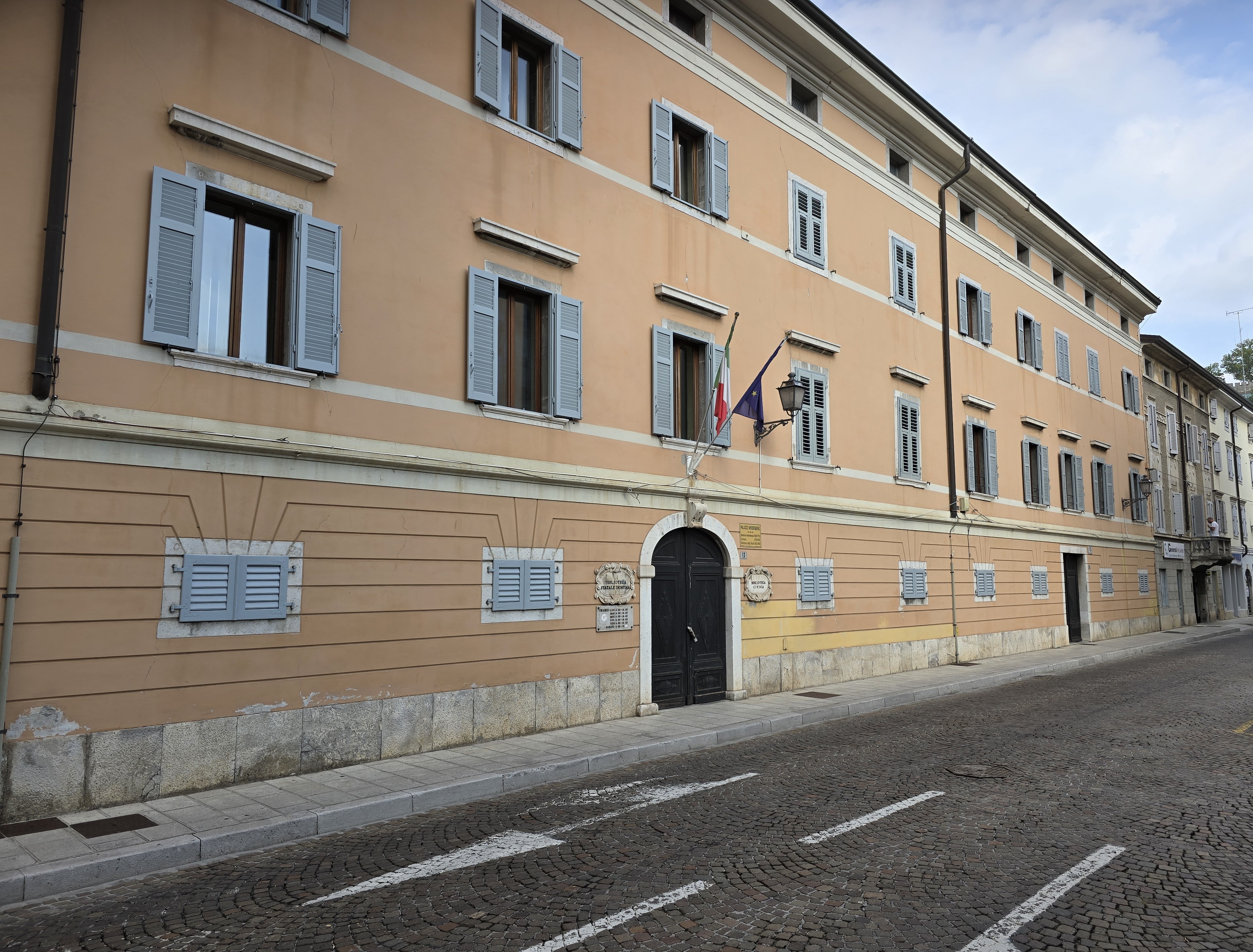
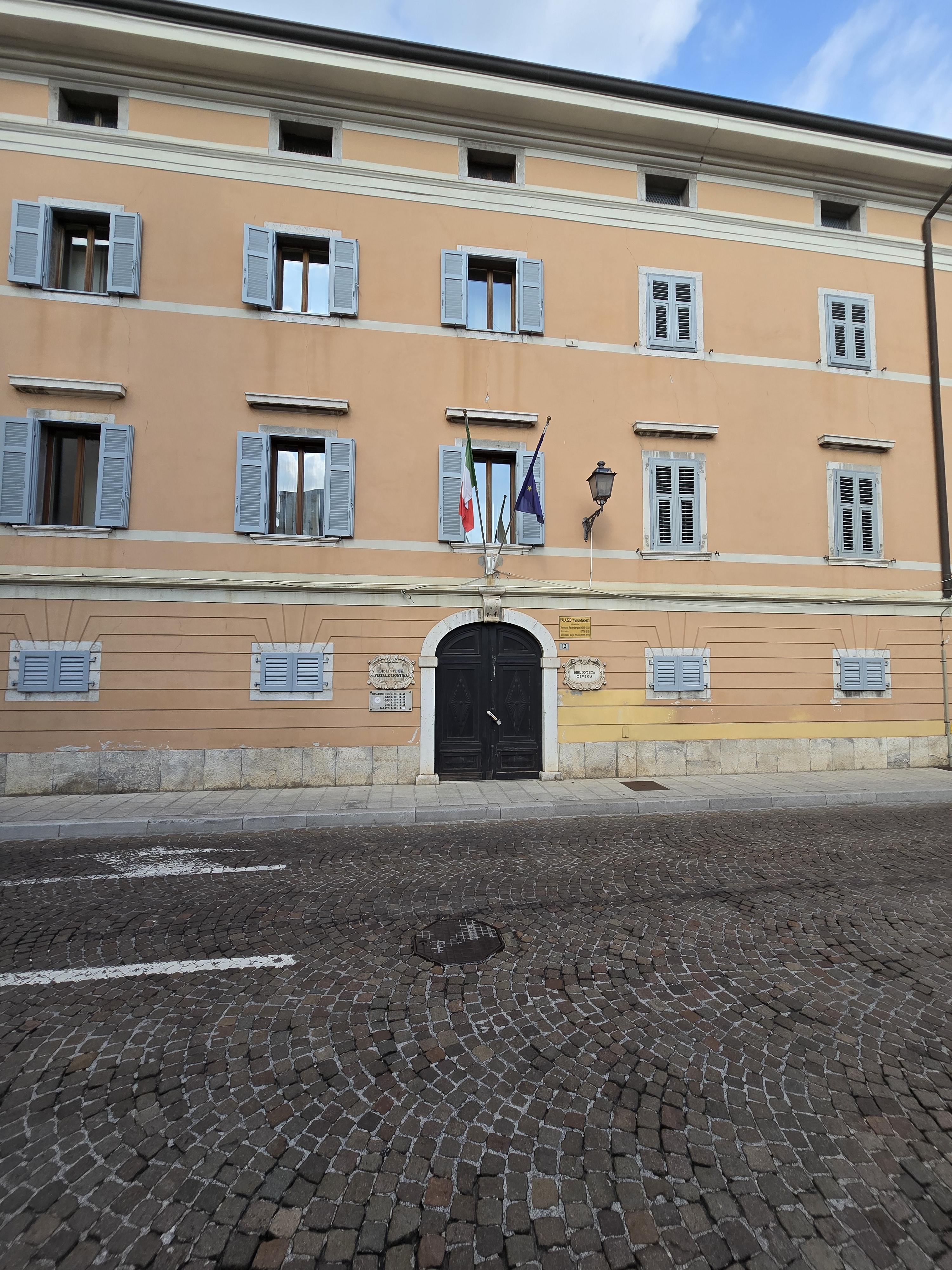
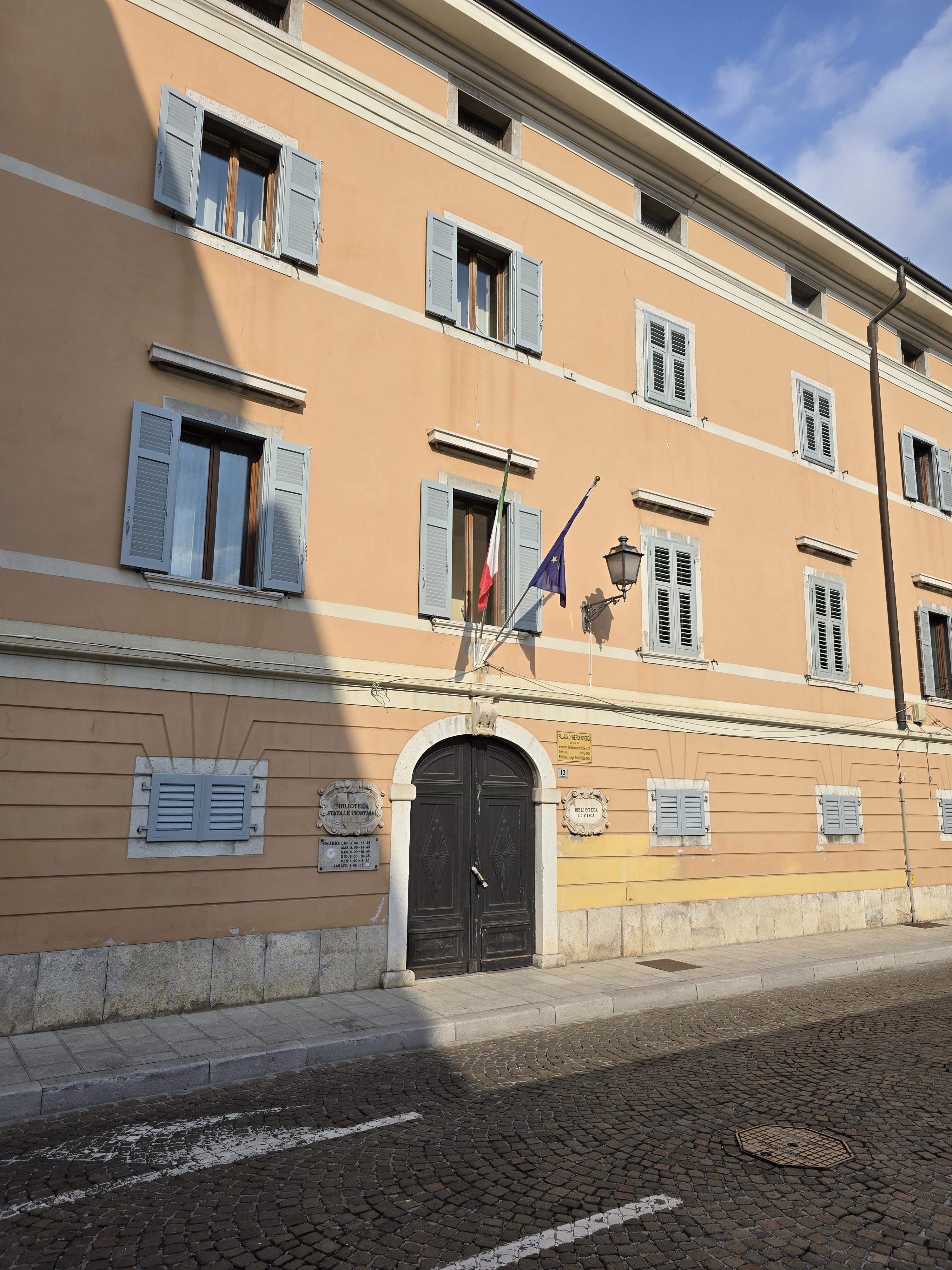
The palace is designed in the Baroque style with a representative façade, a varied floor plan, a spacious inner courtyard, and arcaded corridors on the courtyard side. The palace was complemented by the Chapel of St John, and the building itself formed the central part of a wider Jesuit complex on the western edge of Travnik Square. Today, as the seat of the Central Gorizia State Library Isontina, it is one of the city’s principal public institutions – still retaining its Baroque character, emphasised by the monumentally designed entrance portal, the harmonious layout of the courtyard, and the stucco decoration on the main representative balustrade staircase, attributed to the architect Giovanni Pacassi.
In the 18th century, the building was remodelled and enlarged several times. After 1773 and the dissolution of the Jesuit order in the Habsburg Monarchy, the building continued to serve educational purposes: first as a college (1755–1813), then as a lyceum (until 1820), and finally as a (German) grammar school (Gymnasium, until 1919).
Since 1822, the building has housed a grammar school library, and its book collection also included works originally owned by the Jesuit monastery. After the First World War, the school moved out of the palace, but the library remained (today the State Library Isontina).