
Description
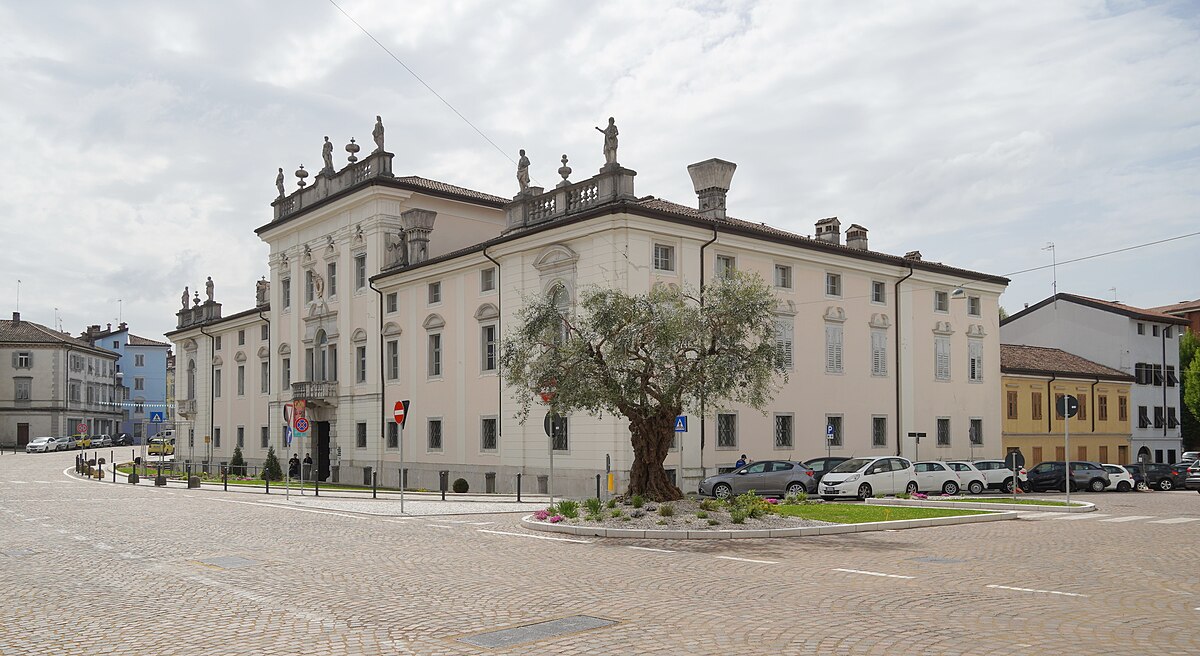
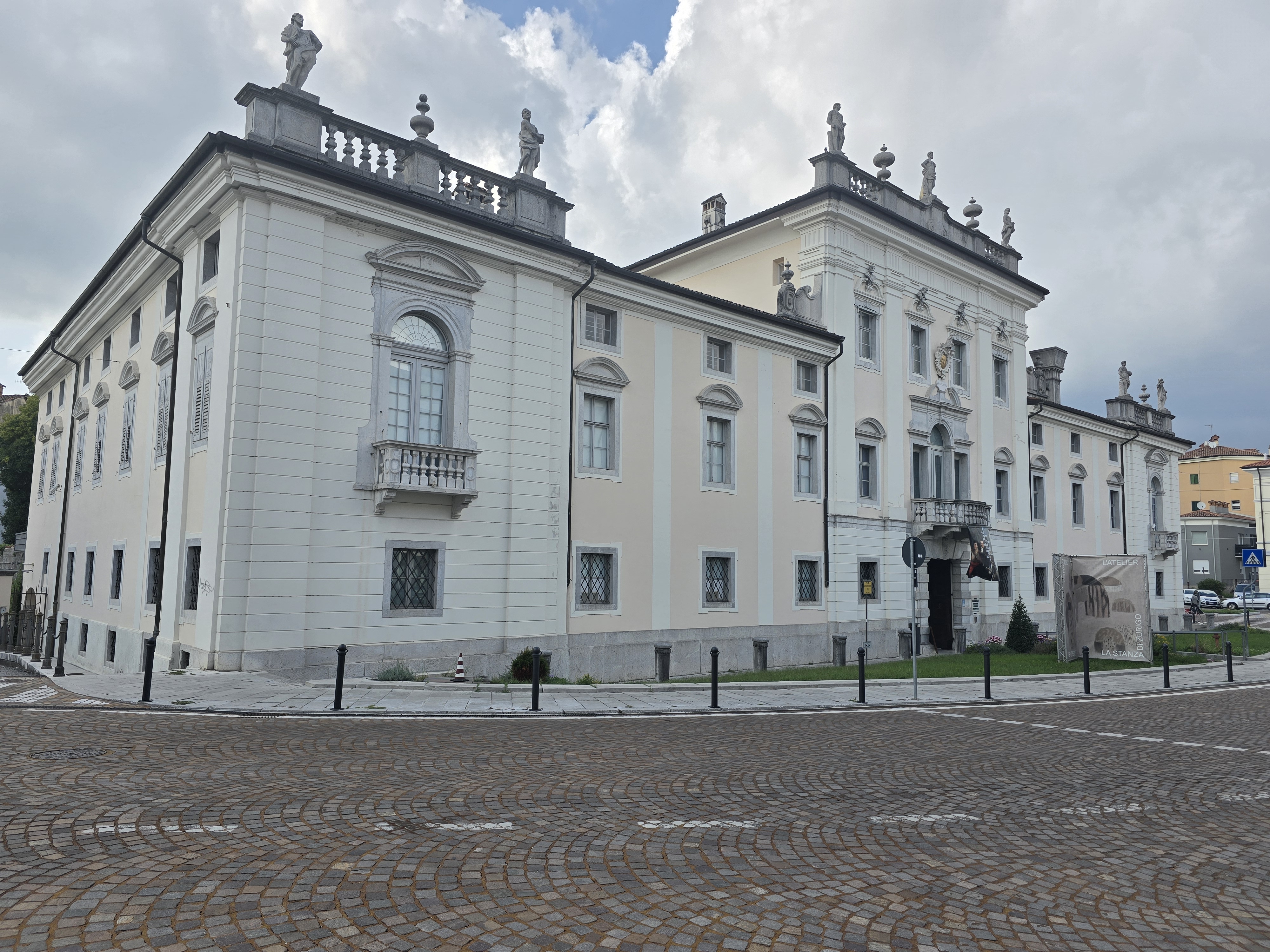
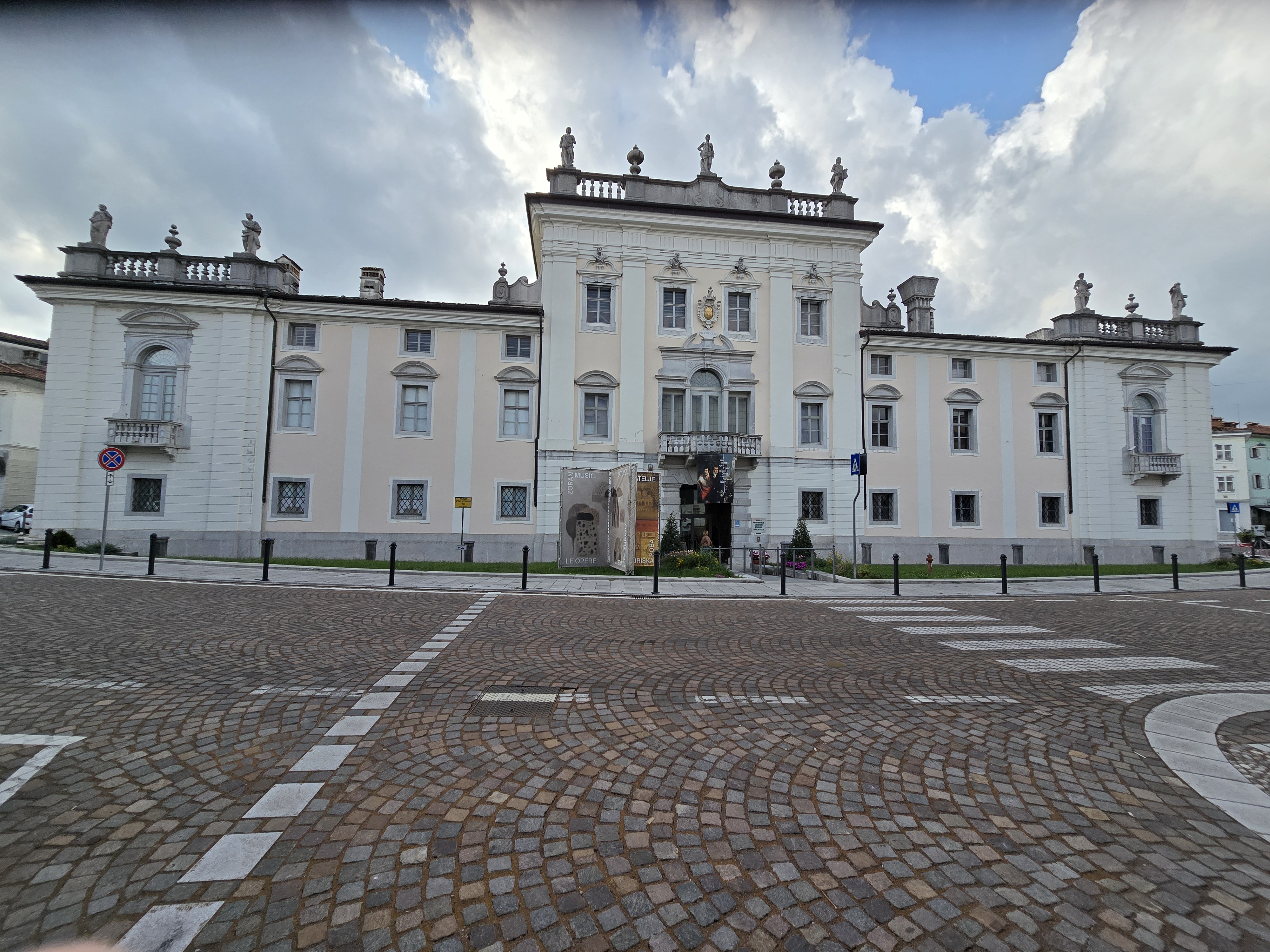
The Attems Palace is one of the most beautiful examples of Baroque architecture in Gorizia. The renovation of the palace was a major financial undertaking, and its current appearance is the result of four construction phases that took place from the end of the 17th century to the end of the 18th century. Renovation began after 1699 under Hermann Sigismund Attems (1625–1707) and continued with additional land purchases by Johann Franz Attems (1665–1721). The construction of Attems’ new city residence was completed by Sigismund, Count of Attems-Petzenstein (1708–1758), in 1744 and 1745 respectively. Since his brother Karl Michael Attems (1701–1774) became the first bishop of Gorizia in the newly established Diocese of Gorizia in 1751–1752, the palace had to reflect the new prestige of the family. For these construction endeavours, he is said to have employed an architect from the workshop of Giovanni (Johann) Pacassi, namely Saverio Gianni, while some attribute the work to Giovanni’s grandson, the famous Austrian court architect Nicolò Pacassi.
At the death of Sigismund Attems (1758), the palace was described as follows:
“The palace has 12 rooms and 7 rooms in the mezzanine; in addition to these, a kitchen, a pantry. The salon was connected to the chapel, which had an altar and an altarpiece. The building complex was connected by an underground passage. The outbuildings within the palace complex consisted of a granary, a cellar with two rooms above, as well as a stable, garden, and courtyard.”
The stable housed several riding and draught horses, which were harnessed to luxurious and smaller carriages. The value of the building complex was estimated at 19,361 guilders and 6 kreuzers at the time of his death, and a similar palace was purchased in Ljubljana by an official with a good entrepreneurial sense, Franz Raigersfeld. The interior furnishings followed more modern trends, as they mostly consisted of wardrobes – furniture that was only slowly making its way into the noble residences of Gorizia. Although this type of furniture was exceptional among the Gorizian elite, it was made by local craftsmen, just as for other nobles, from the same types of wood: birch, walnut, pear, and from the natural – grey or light – prestigious varnished wood of fir, from which several pieces were made in the palace.
Sigismund Attems, a jurist by training, held high-ranking official positions in Gorizia, whose prestige was not reflected in good pay. His salary alone could not have enabled him to embark on prestigious building projects. Together with the income from family property, he apparently managed to create a stable basis for investing in the renovation of the city palace and country mansions, because in addition to the renovation of the city palace, Attems also undertook major construction work in a villa in nearby Podgora (today Piedimonte). Sigismund employed the architect Saverio Gianni for the renovation. He ordered painting work from Gorizia painters (Johann Michael Lichtenreit, Antonio Paroli); only for the altarpiece of the family chapel in the former church of St Francis did he turn to the Veronese artist Giambettino Cignaroli. Despite the large construction expenses, Sigismund Attems died without debts, and completion of the villa in Podgora was taken over by his son Johann Ludwig Attems (1749–1820).
From the villa in Podgora, which is now part of the city of Gorizia but was a village in the middle of the countryside in the 18th century, the Attems family managed their land holdings in Lucinico, Podgora, and Dolnje Cerovo, and they also had a house in Cerovo. They owned as well a manor at Jazbine, which Sigismund’s father bought in 1714 and which Sigismund had renovated by the architect Saverio Gianni in 1747. The manor in Podgora embodied the popular idea among the Gorizia nobility of a “rural retreat”, to which they retired from late spring to early autumn. Sigismund Attems wrote that he “retreats to Podgora in order to have more free time for recreation, reading, to skim a few pages with some ingenious short writing, and to think even more about people from the past.” The entire complex was only completed in the 1780s. The authorship of the plans is attributed to Nicolò Pacassi, but he was most likely present only in the final phase. The main façade is designed in the Palladian manner with pilasters, architrave, and attic with obelisk chimneys, and is reached by a representative double staircase. The entire U-shaped complex is reminiscent of Schönbrunn, but the interior with a central hall and side wings deviates from the classic Venetian division of spaces. Although its exterior is inspired by Austrian Late Baroque castles, it combines the residential and commercial functions typical of Italian villas, which is why it served as a suburban villa and at the same time as the seat of a rural estate.
Combining elements of Baroque and Rococo, the palace in Gorizia enchants visitors with its monumental façade. It has a prominent central part articulated by pilasters, a profiled roof wall, and a roof section accentuated by a balustrade and statues. The rectangular portal is surrounded by rustication, and the balustrade balcony on consoles and the triforium with rich relief accents and the family coat of arms at the height of the first floor are particularly representative. The longitudinal design of the main façade is articulated mainly by sculpturally decorated windows. A double staircase leads from the lobby to the upper floor with representative rooms in the so-called piano nobile style and a salon decorated with rich stucco, which are the work of the sculptor Giovanni Battista Mazzoleni.
The palace remained in the ownership of the Attems family until the late 19th century, after which it changed hands several times. Since 1900, it has been used as the Provincial Museum (now comprising archaeological, painting, and historical departments, as well as a library). It was damaged in both World Wars and later restored.
Address
Activities
Map