Description
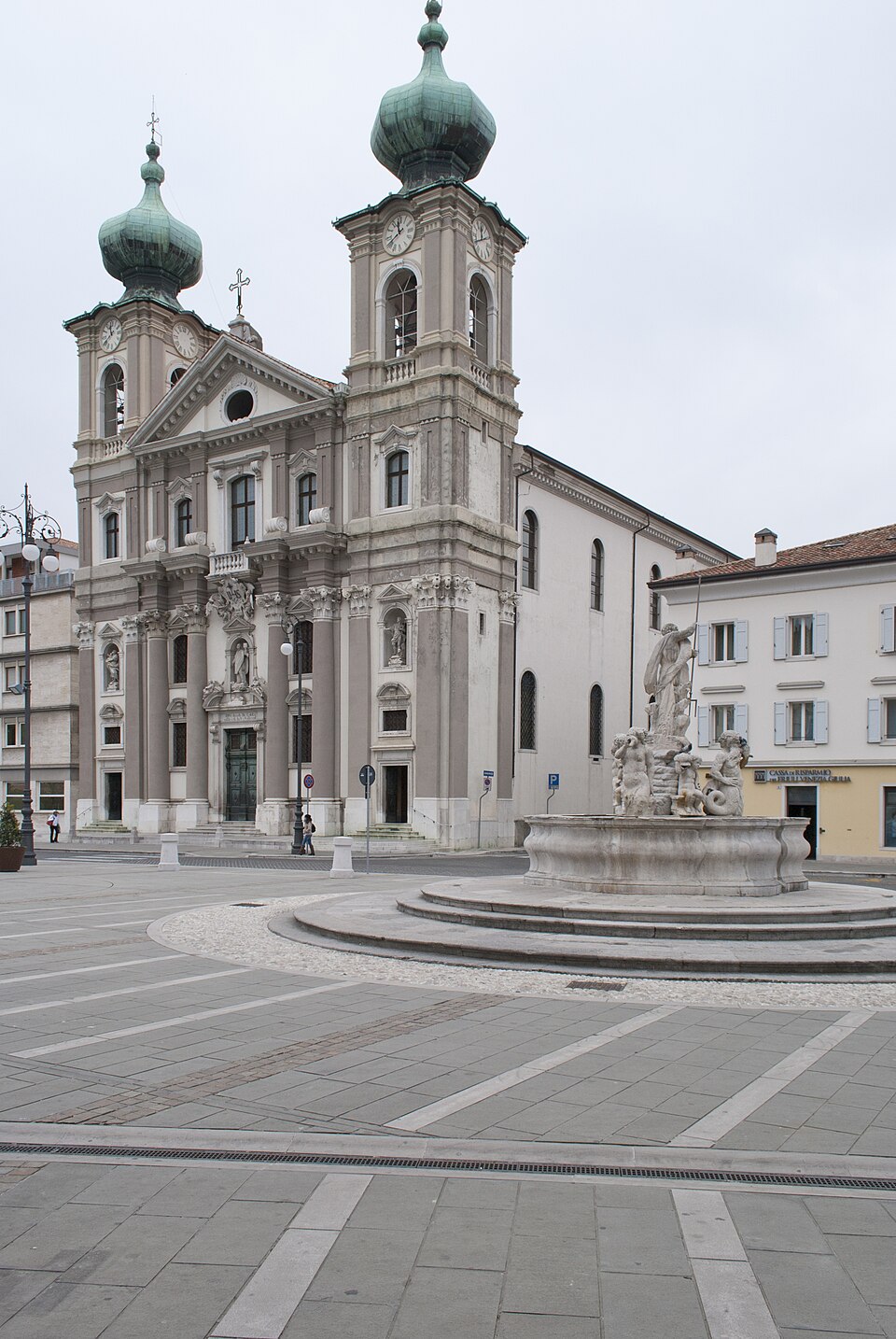
Before the construction of the Church of St Ignatius, the Jesuits in Gorizia performed church services in the Church of St John and in the chapel of the house they bought on Travnik Square. The chapel was used until 1681, when they began to hold church services in the still unfinished Church of St Ignatius. The Church of St Ignatius is the central sacral building of the Jesuit complex, located next to the eastern wing of the college in the Verdenberg Palace, and its main façade faces Travnik, the central square of Gorizia. From an urbanistic perspective, the complex had a decisive influence on the transformation of the city centre: its location on Travnik (piazza del prato, or “Meadow Square”) shifted the core of urban life from the old centre to the west.
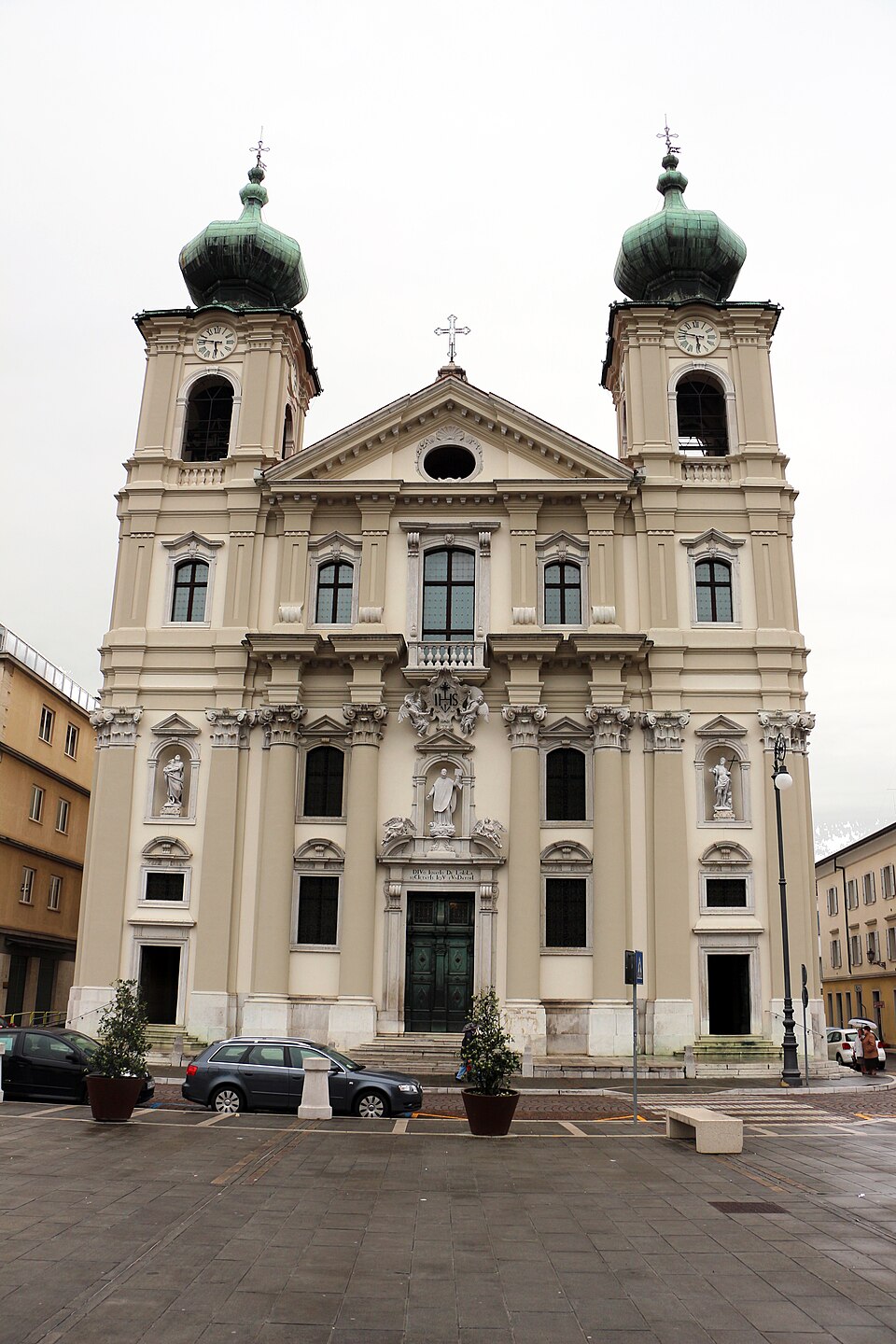
Construction began in 1654 and lasted until 1721, as confirmed by the inscription with a chronogram on the portal (DIVo IngatIo LoIola soCIetatis IesV fVnDatorI, 1723). In the first year of construction, the foundations and walls of the apse and two side sacristies were laid. Sources report that the walls collapsed due to heavy rain and allegedly poor construction, which was the result of haste. The construction work was led by the builder Bartolomeo Winterleiter from Rijeka. By 1664, the roof over the sacristies and presbytery had been completed, but work then stopped until 1683 because of a plague epidemic. The façade was completed between 1721 and 1722. In 1767, the church was consecrated by the first Archbishop of Gorizia, Karl Michael Attems.
The façade, which most researchers attribute to the architect Christoph Tausch, a student of the famous Andrea Pozzo, represents the peak of the mature Baroque in Gorizia. The façade is divided in the Baroque manner by engaged Corinthian columns that create clear vertical axes. The horizontal axes consist of rectangular window openings of various sizes and statues (St Joseph with the Infant Jesus and St John the Baptist) in niches. The central part is emphasised by a portal that is slightly larger than the side ones, a balustraded railing, and a triangular pediment. The bell towers are topped with Baroque onion domes.
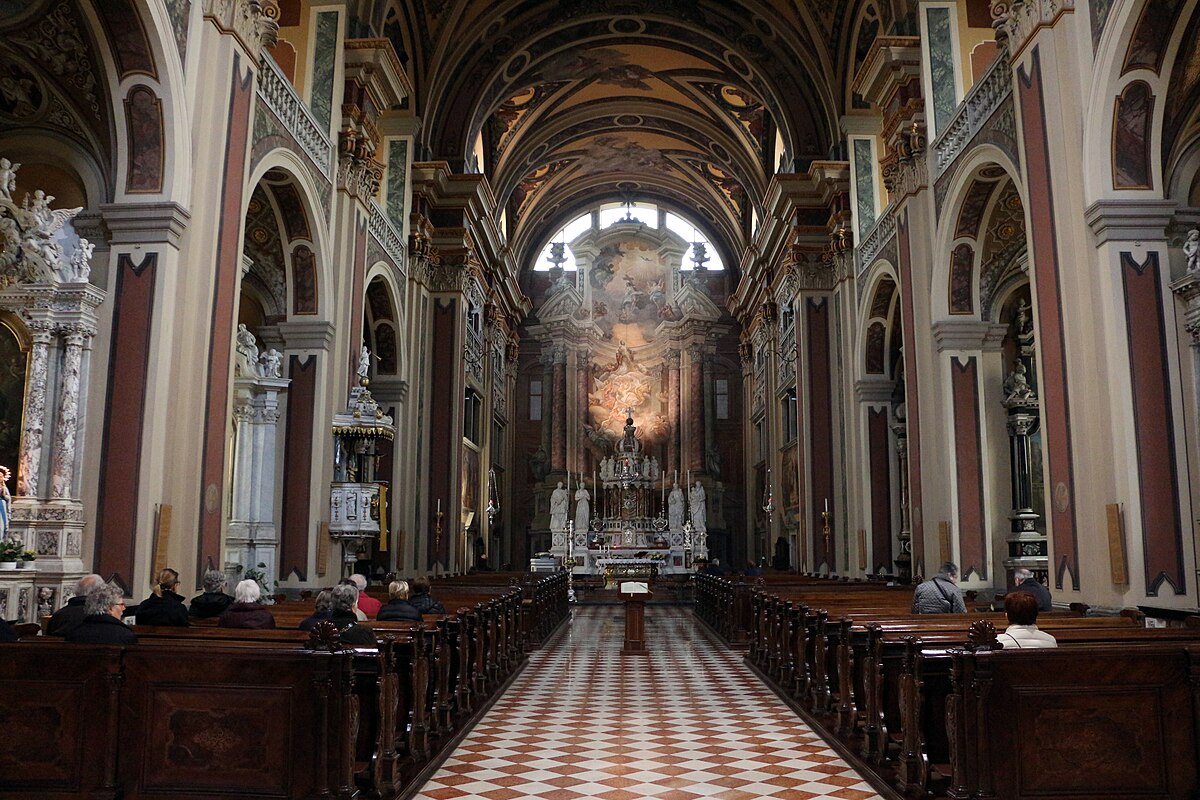
The interior of the church follows the typical Jesuit floor plan of a wide main nave with side chapels. Tausch introduced a distinctly scenographic Baroque style to Gorizia, with the concept of a holistic work of art that intertwines architecture, sculpture, and painting. His style is recognisable by the strong contrast of light and shadow, dynamic entablatures and mouldings, and the creation of spatial illusions typical of 18th-century Jesuit architecture.
The interior of the church is designed as a single-nave space with side chapels, marble altars, and rich stucco decoration. Of particular interest are the vaulting system in the presbytery, divided into bays, and the deep chapels with galleries above, which follow the Viennese Jesuit church almost to the last detail. The walls and ceilings are richly painted with illusionistic frescoes, among which the Glory of St Ignatius in the apse stands out.
In the right-hand nave are chapels with associated altars dedicated to the saints of the same name: Tobias Chapel (altar 1745; the altarpiece may be the work of Jacopo Amigoni, an artist from the circle of G. Bazzani, 2nd half of the 18th century); the Chapel of St Barbara (the altarpiece is the work of Rafael Pich, 1861); and the Chapel of St Joseph (the altarpiece was commissioned by the Counts of Cobenzl, 1685; the painting is the work of a painter from the circle of Giuseppe Moretta and Jacopo Bassano, dated to the late 16th century).
In the main nave is the high altar (Pasquale Lazzarini, 1716) with statues of the four evangelists (Luke, Matthew, John, and Mark) and the illusionistic fresco Glory of St Ignatius (Christoph Tausch, 1721) in the background. In the left-hand nave are: the Chapel of St Francis Xavier (altar 1686; altarpiece by the painter Clement del Nori, 1920); the Chapel of the Holy Cross (altar 1764; altarpiece by Franz Lichtenreit, mid-18th century); and the Chapel of the Immaculate Conception (altar 1736; altarpiece by an unknown Graz master, 18th century).
The Jesuit order developed its own standardised floor plans for the construction of its churches, as exemplified by the Church of St Ignatius in Gorizia. The first of these was built in Rome by Giacomo Barozzi da Vignola (Il Gesù, 1568–1580). It is a three-aisled church, whose side aisles form chapels.
The altar of St Francis Xavier was created from the financial legacy of the Counts of Della Torre. The patron saint was chosen because Francis Xavier became the patron of the County of Gorizia in 1687.
The present altar of the Holy Cross was commissioned by Count Nicolo Strassoldo. This altar replaced an earlier one, also dedicated to the Holy Cross, which had been commissioned by Germanico della Torre in 1681 and transferred to the church in Šempeter pri Gorici in 1764.
Next to the church stands the Column of St Ignatius, which originally stood in front of the Della Torre Palace. Its predecessor was wooden and was commissioned by the Jesuits on the centenary of the founding of the order in 1640. For this reason, Francesco Moisesso donated money for a new stone monument, which was erected in 1658. Unfortunately, the ravages of time also wore this statue down. In 1687, a new statue by one of the Pacassi sculptors was placed on the column. Sources report a dispute between the Della Torres (majority owners of the square), the Lanthieris, and the Jesuits over ownership of the monument. When the Jesuits closed the church during a plague epidemic, they took refuge in front of the Column of St Ignatius in protest.
Address
Activities
Map